















Elevator Mechanical Components are among the most essential parts of any elevator system, responsible for transmitting power, ensuring safety, stability, and smooth cabin operation. These components, working in full coordination with electrical and control parts, guarantee safe, smooth, and reliable performance throughout the elevator’s movement. Below, the most important elevator mechanical components, including buffers, bases, wire ropes, car sling, motor, cabin, and frame, are examined in detail.
1. Elevator Buffer
The buffer is one of the most critical safety devices of an elevator, installed in the pit, and is responsible for absorbing impact energy in case of an error or sudden fall, preventing the cabin or counterweight from striking the pit floor violently.
Buffers are mainly divided into two types:
- Hydraulic Buffer: The most common type in modern elevators. This buffer uses oil and a piston to convert kinetic energy into thermal energy and absorbs the impact smoothly.
- Spring Buffer: An older and more economical type that works with the elastic property of a steel spring, but its energy absorption is less than the hydraulic model.
Buffers should be selected according to the elevator’s rated speed and capacity. According to EN 81-20 standard, buffers must be designed so that the final impact does not exceed the permissible limit.
2. Elevator Buffer Base
The buffer base is responsible for securely fixing and supporting the buffer on the pit floor. This base is usually made of thick steel with strong welding to transfer the force from the cabin or counterweight to the building structure during impact.
In professional projects, the buffer base includes a leveling plate and height adjustment bolts to maintain precise alignment with guide rails. Proper design of the buffer base directly affects the correct performance of the shock-absorbing system.
3. Elevator Rope Hanger / Rope Bracket
The rope hanger is installed at the top of the shaft or on the cabin yoke and serves as a support for the wire ropes. This component must withstand the tensile force from the weight of the cabin and counterweight.
In modern designs, the rope hanger is made from bend-resistant alloy steel and usually includes a groove or sleeve to prevent rope slippage. Using wear-resistant, greased bushings at contact points increases system longevity.
4. Elevator Motor Base
The motor base is a platform on which the elevator gearbox or gearless motor is mounted. Its function is to safely transfer force to the structure and prevent vibration or shaking of the motor during operation.
In traction elevators, the motor base is typically installed in the machine room or above the shaft in machine-room-less models. Modern bases are made from reinforced steel sheets and rubber or neoprene dampers to prevent motor vibrations from transferring to the building and to reduce operational noise.
5. Elevator Wire Rope
The wire rope is one of the most important force-transmitting components in an elevator, stretched between the cabin and counterweight, responsible for safe movement.
Wire ropes are made of helical steel strands twisted around a core (Steel Core or Fiber Core). The choice of steel or fiber core depends on the application, environmental moisture, and system weight.
Key features of wire ropes include:
- High tensile strength
- Proper flexibility
- Wear resistance
- Galvanized surface to prevent rust. According to EN 12385, the pulley-to-rope diameter ratio (D/d ratio) must be observed to avoid premature failure.
6. Elevator Car Sling
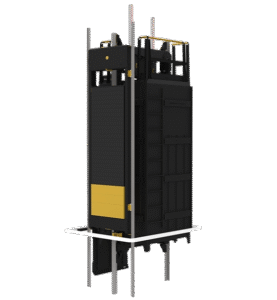
The car sling is the metal frame supporting the cabin, onto which the cabin is mounted and to which the ropes are attached. This structure must have high strength, precise alignment, and resistance to torsion and bending.
The sling is typically made from heavy steel profiles with precise welding and includes upper yoke, lower yoke, cabin floor support, and suspension system.
In modern designs, rubber buffers and anti-vibration systems are used in connections between the cabin and sling for smoother elevator movement.
7. Elevator Motor
The motor is the main driving force of the system, transferring rotational force to the sheave via a gearbox or directly (gearless).
There are two main types of motors:
- Geared: Suitable for elevators with speeds up to 1.75 m/s; equipped with a worm gearbox and higher power consumption.
- Gearless: Without a gearbox, high efficiency, low noise, and low energy consumption; typically used in luxury elevators and high-rise buildings. The motor must have a magnetic safety brake, speed sensor, and ventilation system to ensure stable and safe operation.
8. Elevator Cabin
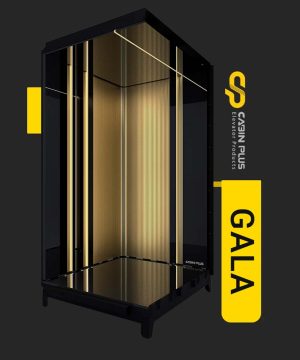
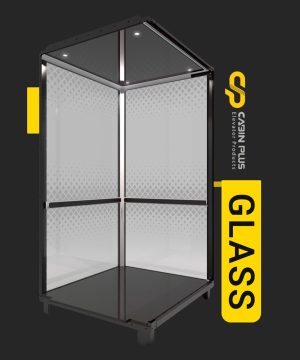
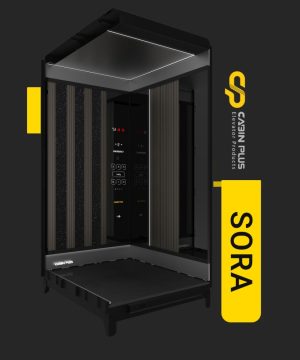
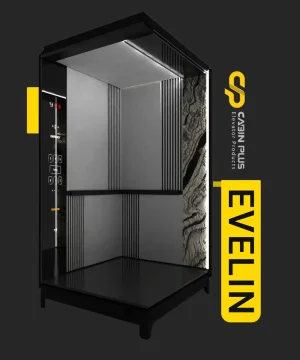
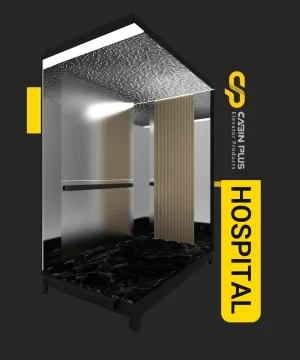
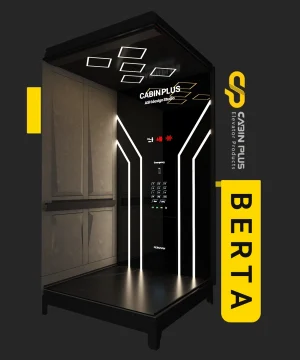
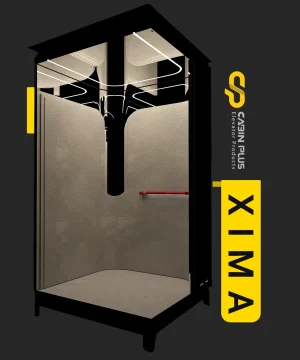
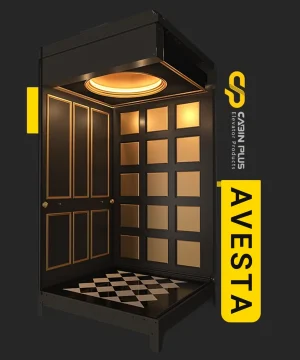
The cabin is where passengers or cargo are located and must be both aesthetically pleasing and structurally safe. The cabin body is made of steel or stainless steel and includes the floor, ceiling, walls, handles, and ventilation system.
Modern designs use LED lighting, brushed steel decor, tempered glass, false ceilings with hidden lighting, and natural stone flooring.
The cabin is mounted on the sling and guided by rails to ensure smooth and vertical movement.
9. Elevator Frame
The elevator frame or chassis is the main metal structure responsible for supporting and transferring forces among mechanical components such as the cabin, counterweight, buffer, and rails.
Frames are usually made from hard steel with anti-rust coating, and their design must evenly distribute dynamic and static forces.
Modern frames utilize reinforcement plates, industrial CO₂ welding, and non-destructive testing (NDT) to ensure high durability.
In summary, elevator mechanical components are a coordinated set of precise and durable parts, each playing a vital role in safety, smooth operation, durability, and ride quality of the elevator. Proper selection and installation of these components according to global standards ensures long lifespan and system safety.
