


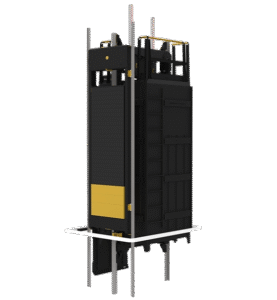

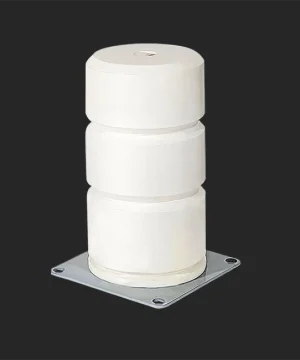
Elevator Buffer is one of the most critical safety components in elevator systems, playing a key role in protecting passengers, the elevator cabin, and mechanical equipment during emergencies. This component is installed as the final shock absorber at the lowest part of the pit and is responsible for absorbing the kinetic energy caused by sudden movements or the fall of the cabin and counterweight frame, preventing direct contact with the pit floor. Proper buffer performance in elevator design is mandatory according to international standards such as EN 81-20 and EN 81-50.
Structure and Function of the Elevator Buffer
A buffer is essentially a mechanical energy absorber that, upon contact with the cabin or counterweight frame, converts kinetic energy into thermal or elastic energy in a controlled manner. This process reduces sudden acceleration and prevents damage to the elevator structure. Buffers are generally divided into two main categories depending on the design and rated speed of the elevator:
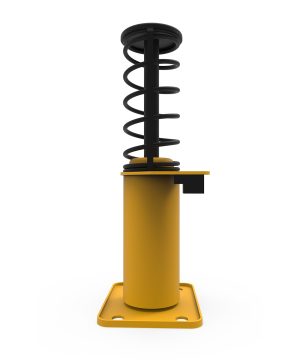
- Spring Buffer:
Made of one or more compressed steel springs that absorb impact energy through their elasticity. This type is mostly used in elevators with speeds below 1 meter per second.
Advantages: Simple structure, lower cost, low maintenance
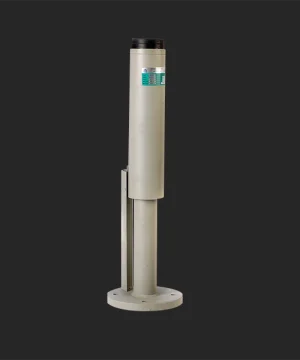
Disadvantages: Rapid rebound after compression, which can cause oscillation, and not suitable for high-speed elevators. - Hydraulic Buffer (Oil Buffer):
In this model, kinetic energy is absorbed by the movement of a piston within an oil-filled chamber. Controlled oil flow through specific holes gradually reduces the cabin’s speed upon impact.
This type is mandatory for elevators with speeds above 1 meter per second.
Advantages: Smoother absorption, gradual operation, high safety standard
Disadvantages: Higher cost, requires periodic maintenance and oil level monitoring
Components of a Hydraulic Buffer
A standard hydraulic buffer usually consists of the following parts:
- Durable steel body with anti-corrosion coating to withstand high pressure
- Piston and oil cylinder that convert compressive force into fluid movement
- Calculated-volume oil reservoir to absorb the required energy
- Oil flow control valves (Orifice Valve) to regulate the discharge speed of the oil
- Piston return spring to restore the system to its initial position after impact
These components must be tested according to EN 81-50 standards to ensure proper performance in emergency conditions.
Role and Importance of the Buffer in Elevator Safety
The buffer is a passive safety component, meaning it only operates under abnormal conditions, but its function is vital. In case of a control system failure or rope breakage, the cabin or counterweight moves downward at high speed. In such situations, the buffer gradually absorbs the energy, preventing severe impact, pit floor breakage, or cabin overturning. Without a properly functioning buffer, direct cabin impact with the floor can result in serious structural damage, suspension system failure, and even life-threatening risk for passengers.
Installation Location and Technical Requirements
Buffers are installed at the pit floor, directly beneath the final stopping point of the cabin and counterweight frame. The distance between the cabin floor and the buffer surface must be such that there is no contact under normal conditions, but controlled impact occurs during a fall or excessive movement. Key installation requirements include:
- Perfect alignment of the buffer base with rails and pit floor
- Use of a strong buffer base with industrial welding to withstand vertical forces
- Periodic oil level checks (for hydraulic buffers)
- Ensuring full piston return after compression
Maintenance and Periodic Inspection of Buffers
According to standard guidelines, buffers must be periodically inspected. Important maintenance points include:
- Checking for oil leakage
- Inspecting the spring or piston condition
- Ensuring no rust or corrosion
- Testing performance under controlled conditions
In elevators with speeds exceeding 1.6 meters per second, buffers must have a self-resetting system to return to the initial state automatically after use without manual intervention.
Conclusion
Although the elevator buffer may appear to be a simple component, technically it is one of the most complex elements of the elevator safety system. Selecting the appropriate buffer type based on rated speed, cabin capacity, pit height, and safety standards is essential. Using standard buffers from reputable brands, proper installation on strong bases, and regular maintenance ensure safe operation and long service life of the entire elevator system. Undoubtedly, this component plays an irreplaceable role in protecting passengers and minimizing potential damage during emergencies.
