


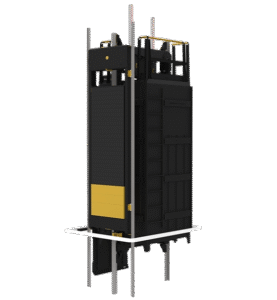

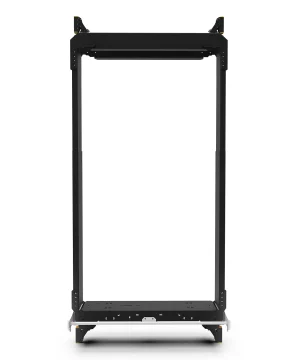
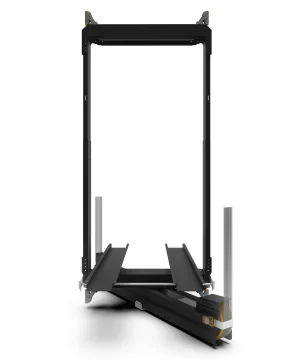
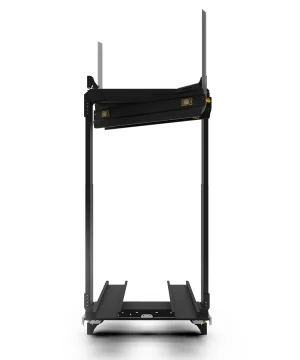
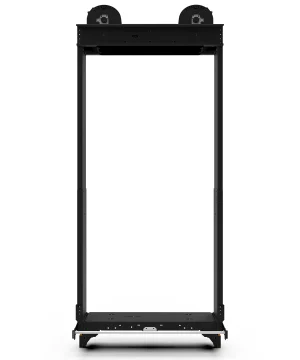
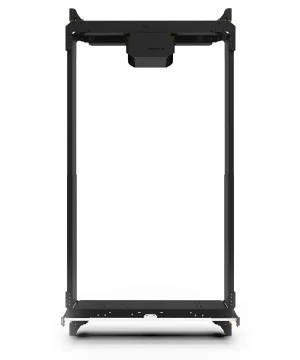
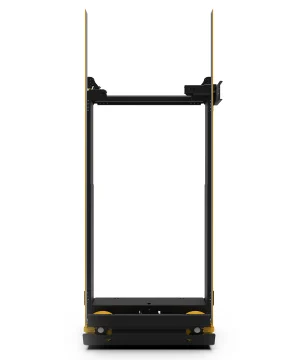
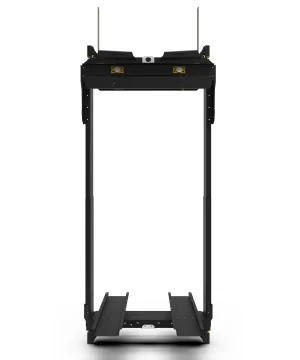
The Elevator Frame, sometimes referred to as the car chassis or car frame (Car Frame), is one of the most important and sensitive mechanical components of the elevator system. This part acts as the main skeleton of the cabin and is responsible for transferring the weight of the cabin, passenger or cargo load, and dynamic forces generated by elevator movement to the suspension system and guide rails. In fact, the elevator frame is a key element in maintaining the safety, balance, and proper functioning of the entire lifting system.
Structure and Main Components of the Elevator Frame
The elevator frame is composed of several main parts:
- Main Frame Structure:
This section is made of high-strength steel profiles (usually ST37 or ST52) and is responsible for bearing the overall load of the system. The frame is typically designed as two vertical beams and two horizontal beams reinforced with connection plates. - Crosshead & Base:
The base of the frame is where the cabin is mounted. The lower section usually houses the safety system (parachute), guide rollers, and in some models, buffers. - Governor and Safety System:
At the top of the frame, the governor bracket and levers connected to the safety gear are installed to stop the cabin in case of sudden speed increase. - Guide Shoes:
These components are located on both sides of the frame to ensure the cabin moves along the elevator rails smoothly and without vibration.
Types of Elevator Frames
Depending on the suspension system and the position of the counterweight, elevator frames are designed in two main types:
- 1:1 Frame:
In this type, the wire rope is directly connected to the cabin and is used for high-speed or heavy elevators. - 2:1 Frame:
Here, the wire rope passes over pulleys to reduce the cabin movement ratio relative to the cable length. This design is suitable for low-rise elevators or those with smaller motors.
Material and Manufacturing Method
Elevator frames are manufactured from construction steels ST37, ST44, and ST52. The type of steel is chosen based on elevator capacity, travel height, and permissible load. Components are precisely cut using CNC Plasma or laser machines and then assembled by CO₂ or MIG welding. Finally, frames are coated with electrostatic powder paint or cold galvanization to prevent corrosion.
Design and Technical Calculations
The frame design must comply with international standards such as EN 81-20 and ISIRI 6303. Calculations take into account parameters such as cabin weight (Wc), nominal load weight (Wp), buffer impact force (Fb), and wire rope safety factor (S). The frame must not undergo permanent deformation under critical conditions such as brake failure, falling, or buffer collision.
Approximate total load on the frame:
F_total = (Wc + Wp) × g
A suitable safety factor is added based on the elevator’s capacity and speed.
Safety Systems Attached to the Frame
The elevator frame serves as the mounting point for several critical safety systems:
- Safety Gear: Locks onto the rail during speed drops or wire rope failure.
- Governor Lever: Connects from the top of the frame to the safety gear.
- Overload Sensor: Installed on the frame base in some models to prevent overloading.
Installation and Adjustment of the Elevator Frame
During installation, the frame must be precisely aligned perpendicular to the rails to prevent friction or vibration. The permissible gap between guide rollers and rails should not exceed 1.5 mm. Welded or bolted connections must resist impact and vibration forces.
After installation, safety tests including parachute test, load test, and buffer impact test are performed to ensure proper operation.
Maintenance and Servicing of the Elevator Frame
Although the frame is a fixed component, it must be periodically inspected for issues such as <strong:loose bolts, metal corrosion, weld cracks, and misalignment. In humid environments, the paint or protective coating should be regularly renewed.
Conclusion
The elevator frame is the backbone of the vertical transportation system, and the safe and accurate operation of the entire elevator depends on the design quality, material, installation, and maintenance of this structure. Selecting a frame with strong steel, precise welding, and adherence to loading standards not only ensures the safety of the cabin and passengers but also extends the system’s service life. Therefore, the elevator frame must be engineered with high precision and continuous quality control to achieve stable, safe, and reliable performance over the years.
