


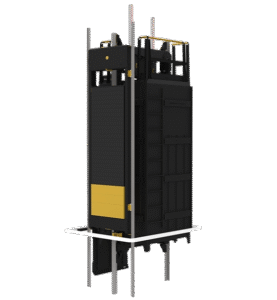



The Elevator Buffer Base is a Vital Safety Platform at the Bottom of the Elevator Pit That Plays a Key Role in the Operation of the Shock Absorber.
The elevator buffer base is an important component of the elevator safety system, serving as the mounting location for buffers or shock absorbers at the bottom of the elevator pit. This base must have specific features to ensure proper buffer performance in emergency situations and to prevent potential damage to the cabin, counterweight, and passengers.
Definition and Function of the Elevator Buffer Base
The elevator buffer base is a platform installed at the floor of the elevator pit where buffers (shock absorbers) are mounted. This base must be mechanically strong, stable, and accurately installed to properly absorb and transfer the impact energy from a cabin or counterweight fall or collision.
Technical Specifications of the Buffer Base
- Standard Height: The buffer base should be at least 50 cm above the pit floor to provide sufficient space for the buffer to operate.
- Material: Typically made of reinforced concrete, steel, or a combination of durable materials to withstand pressure and impact.
- Accurate Installation: The installation site of the base must be fully leveled and in accordance with the elevator’s execution plans to ensure the buffers are correctly positioned.
Safety Role of the Buffer Base
The buffer base acts as the last line of safety defense in an elevator. In the event of a malfunction in the braking or speed control system, the cabin or counterweight may move downward at high speed. In this case, the buffers mounted on the base absorb the kinetic energy and prevent a severe collision with the pit floor.
Types of Buffers and the Base’s Impact
Buffers are divided into three main types:
- Spring: Suitable for light elevators with low speed.
- Hydraulic: For heavy and high-speed elevators, requiring a very strong base.
- Polyurethane: Combines shock absorption and noise reduction, requiring a flat and stable base.
Each type of buffer requires a base with specific characteristics. For example, a hydraulic buffer needs a base capable of handling high pressure, whereas a spring buffer can be mounted on lighter metal bases.
Installation Considerations for the Buffer Base
- Structural Calculations: Must be performed by a civil engineer to ensure the base can withstand impact forces.
- Insulation and Drainage: To prevent water penetration and damage to the buffers.
- Maintenance Access: The base should be designed to allow inspection and replacement of buffers.
Standards and Requirements
The installation of the buffer base must comply with international standards such as EN 81 and national building regulations. These standards include requirements for installation position, dimensions, mechanical strength, and functional safety.
Conclusion
The elevator buffer base is not only the mounting point for shock absorbers but also plays a vital role in the overall safety of the elevator system. Proper design, manufacturing, and installation of this base can prevent serious accidents and extend the service life of elevator equipment.
If you want, I can also prepare a practical checklist or a schematic diagram of the buffer base for you.
