One of the most important and widely used necessities in tall towers and apartment buildings is the elevator. Elevator and lift equipment or components are made up of various parts. The optical sensor or elevator photocell is one of the important components of the elevator system, and due to the high importance of passenger safety, the use of photocells in elevators is mandatory. The elevator optical sensor is responsible for protecting passengers during the opening and closing of the elevator doors. Cabin Plus Industrial Group is with you to provide the necessary information about elevator photocells and their types, so stay with us until the end of this article.
What is an elevator photocell?
Considering the importance of elevators in buildings, the safety of individuals, elevator quality, and their efficiency are increasing day by day. For this reason, the most important issue in elevators is ensuring passenger safety. The sensors installed in every elevator are important components that provide the safety of the elevator and its users. Among these sensors, entry and exit sensors are more important than all others because they prevent injury to passengers. These entry and exit sensors are called optical sensors or elevator photocells.
Elevator photocell
The optical sensor or elevator photocell is responsible for detecting any type of obstacle such as humans or other objects. In simpler terms, these sensors are installed on the entrance door of the elevator cabin, and when the elevator optical sensor detects moving objects such as heavy, light, or even small items, the elevator door does not close. By preventing the elevator door from closing, damage to people inside the cabin is avoided. In fact, by detecting objects, humans, loads, or any other items, light signals are sent to the receiver and the door remains open. Considering the various applications of elevators, elevator photocells are produced and supplied in different types, which we will discuss below.
Types of elevator photocells
Elevator photocells are produced and supplied in different types based on their application. Complete and accurate familiarity with these types of photocells allows you to experience a more economical and reliable purchase. The optical sensor or elevator photocell is divided into two categories, which include the following:
Point photocell
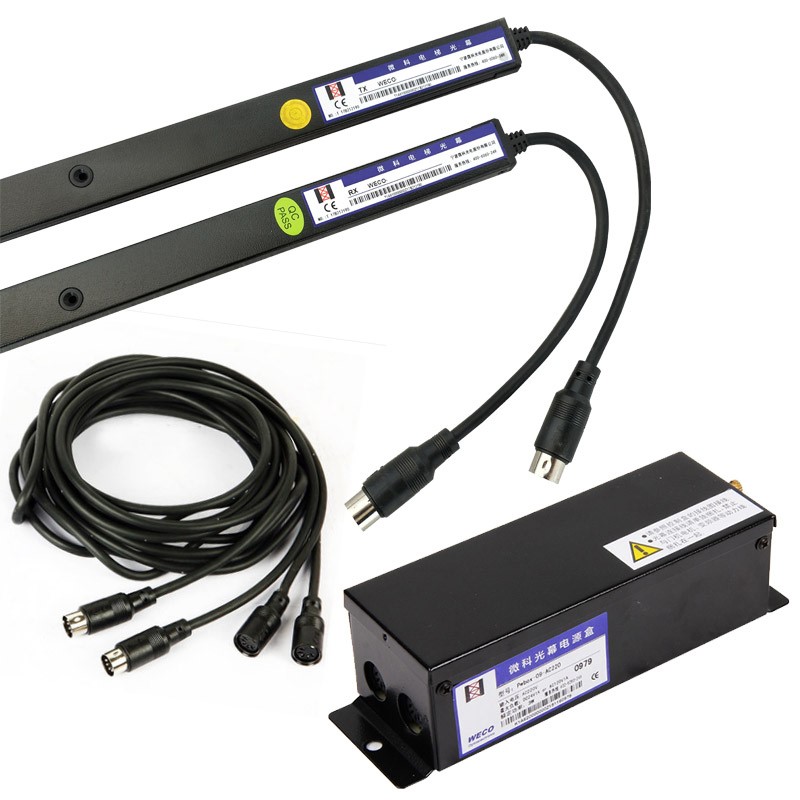
The point elevator optical sensor consists of a transmitter and a light receiver. This type of sensor is installed on the side of the elevator door at a distance of 60 to 70 centimeters. For this reason, this type of optical sensor or elevator photocell is called a point sensor. Some engineers also refer to it as an optical photocell. This component supports only one specific point, which is usually from the middle to the end part of the elevator. The optical photocell is composed of various parts such as a power supply, elevator photocell circuit, wires, and a laser.
Elevator photocell
To prevent the elevator door from closing, the person or load must be positioned exactly in front of the elevator optical sensor. For this reason, it is possible that part of the body or a portion of an object remains outside the cabin. However, since the light beam of the point elevator photocell is not interrupted, the elevator door may close, which reduces elevator safety. The price of point elevator photocells is lower than other types because fewer components are used in this part.
Curtain photocell
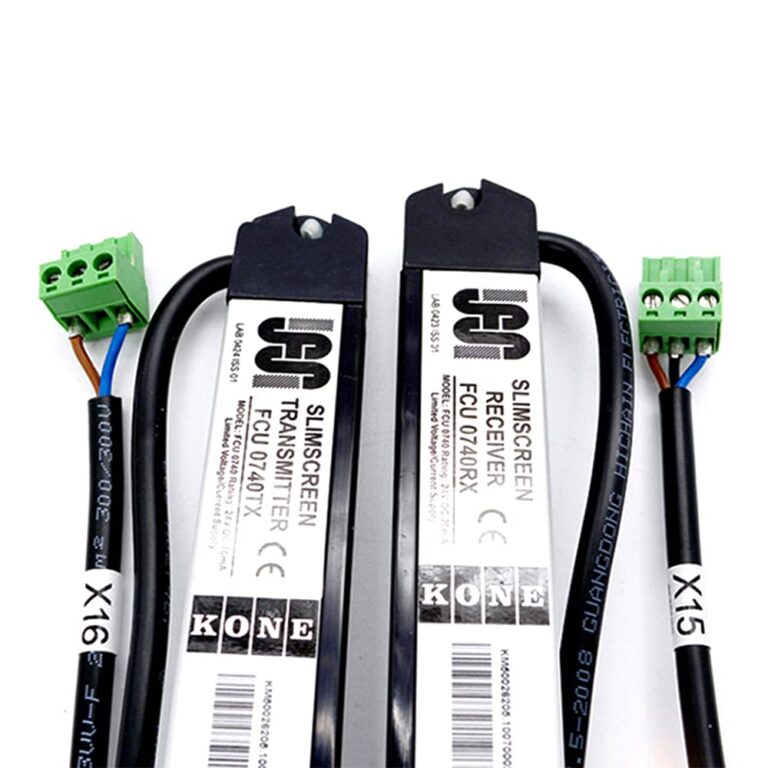
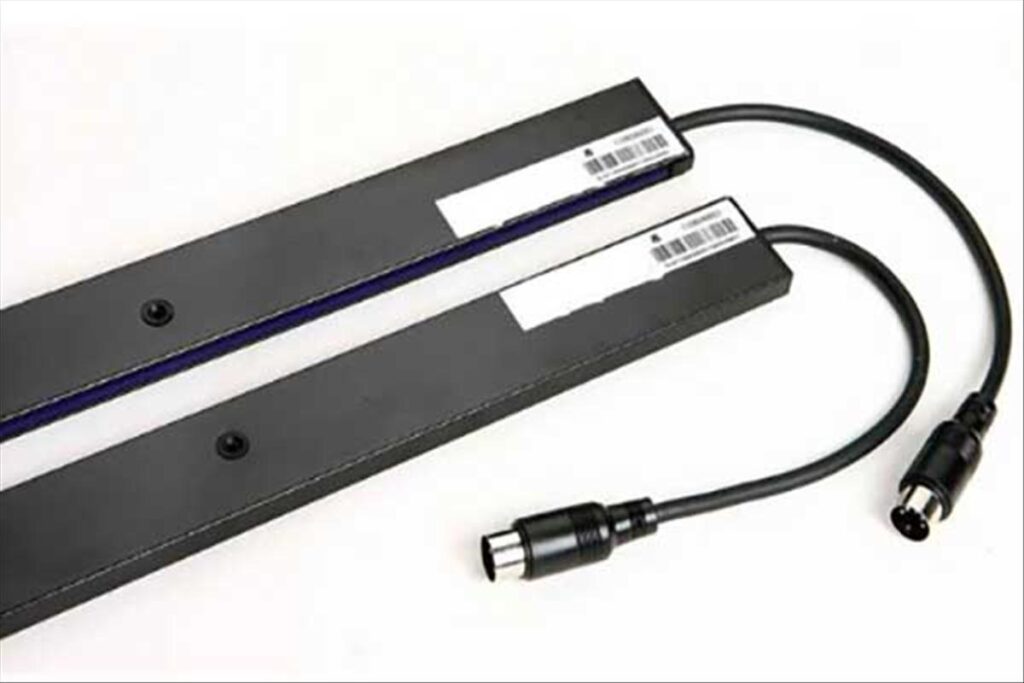
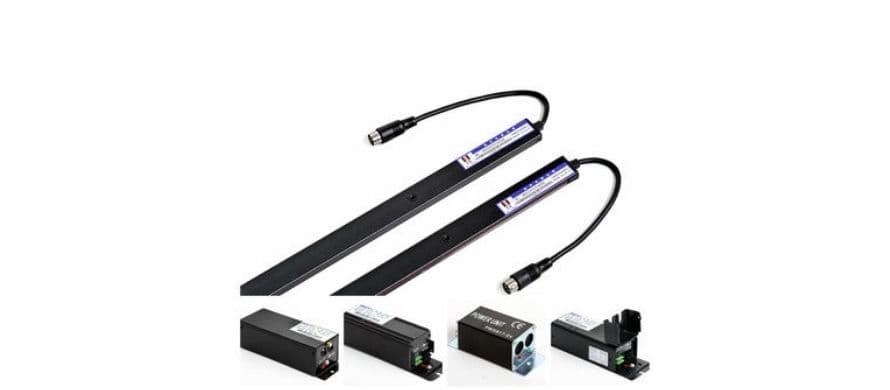
The operation of point photocells and curtain photocells is very similar, and their only difference relates to the points they can cover. Curtain photocells are capable of detecting and covering multiple points and completely cover the entire surface of the elevator door. In other words, the curtain-type elevator optical sensor can detect multiple points and cover them, which results in the entire elevator door being under sensor coverage. Another name for the curtain elevator photocell is the light curtain.
Curtain elevator photocells approximately inspect the entire elevator surface, and upon detecting even a small object, they prevent the elevator door from closing. The curtain-type elevator optical sensor is installed exactly between the door panels and the cabin body and has a diameter of about 8 millimeters, which ensures maximum accuracy and safety. These types of photocells are produced in two forms, movable and fixed, with most users choosing the fixed type. Curtain photocells have a higher price compared to point types due to having more transmitters and receivers.
The difference between curtain and point photocells
As mentioned above, the operation of point photocells and curtain photocells is very similar. However, one of the most important differences between curtain and point elevator optical sensors is the number of points they can cover. In fact, more precision is applied in the construction of curtain photocells, and the number of sensors used in them is also higher, which results in greater safety and security provided by curtain photocells compared to point photocells.
Elevator photocell
The second difference between these sensors is the number of sensors and receivers used in the elevator photocell. Although curtain photocells use many receivers, the possibility of malfunction is also higher. However, through regular maintenance and elevator servicing according to the elevator manual, potential damages can be largely prevented. Photocell prices also differ. Since fewer components are used in point photocells, point elevator optical sensors are cheaper than curtain elevator optical sensors.
Important points when installing elevator sensors
When installing the elevator optical sensor or photocell, make sure not to place the drill bit on the photocell sensor nut. The correct method is to first mark the sensor location, then remove the sensor and drill the door panel so that the red glass lens of the elevator optical sensor does not get dirty. To increase service life and improve photocell performance, place the distance between the receiver and transmitter sensors as close as possible to each other, as sensitivity to angle increases and the amount of error and damage to the device decreases.
If the angle of the elevator photocell is not measured and installed correctly, the elevator door will close much later than usual, which increases passenger waiting time for entering and exiting the elevator. In such conditions, it is better to use specialists or elevator experts for sensor installation to ensure correct installation, increase efficiency, and prevent damage to the component.
Important points when purchasing elevator sensors
Elevator optical sensors or photocells are produced and supplied by various companies. A high price does not necessarily indicate good quality and performance. Rather, to increase safety, quality, and efficiency, make sure the component is original, manufactured with genuine parts, and compliant with required standards. If you do not pay attention to quality and authenticity at the time of purchase, you will incur higher costs in the future for replacement or repair.
Elevator photocell
Choosing and purchasing a standard elevator photocell has various features. The first feature is paying attention to the type of sensor used in the photocell. Sensor types include single-sided or double-sided reflectors. Single-sided models without mirrors are not suitable for detecting objects or people with matte or black colors. On the other hand, reflectorless optical sensors are not capable of detecting objects at distances greater than 2 meters. Therefore, the elevator optical sensor should be purchased according to the elevator’s application. It should be noted that choosing the best brand and quality, especially in high-traffic areas such as commercial places and hospitals, reduces potential risks to individuals in busy buildings.
How to install an elevator photocell
Before installing the elevator optical sensor, note that curtain photocells provide the best performance when installed fixed next to the cabin nose, and fixed installation is more effective than movable installation. Also, ensure that the distance between the two sensors is as close as possible. In this situation, when installing the elevator photocell, pay attention to the negative terminal in the power supply section, as different elevator optical sensors operate at 24VDC and are indicated by black color.
On the other hand, the positive power supply terminal corresponds to 24V, and the NO-COM-NC terminals relate to the relay section, which connects the sensor to mains electricity. If the relay fails, the elevator enters the NORMAL OPEN state and prevents the door from closing. To identify which transmitter and which receiver should be connected to the elevator photocell optical sensor, a lamp can be used: if the lamp is white, it indicates the transmitter, and if the lamp is black, it indicates the receiver.
The impact of elevator photocells on increasing safety
Elevators are among the most widely used devices in any building. This transportation device has made movement between different floors of a building much easier. In other words, elevators consist of a set of transportation equipment used in many residential, commercial, office, hospital buildings, and more. However, you may have heard little about the components that ensure elevator safety during door opening and closing. In fact, the elevator optical sensor or photocell protects passengers inside the cabin.
Elevator photocell
Elevator door photocell sensors are sometimes referred to as photoelectric or infrared beams, electric safety door edge detectors, electric proximity edges, or electric doorkeepers. This is because if a passenger or object is detected in the elevator doorway, the door is prevented from closing. Some door sensors include LED indicator lights inside the sensors to show door movement, where a green light typically indicates an open door and a red light indicates a closed elevator door.
Conclusion
The optical sensor or elevator photocell is one of the most important elevator components, and its presence is mandatory in every elevator. This important component is responsible for protecting the lives of passengers or loads inside the elevator cabin. You may have experienced a part of your body getting caught between doors, but today these sensors prevent such incidents. However, it should be noted that elevator optical sensors operate flawlessly only when they are periodically serviced and maintained under normal conditions, and their proper functionality is ensured by service technicians. For more information about sensor installation and components in elevators, you can contact the consultants of Cabin Plus Industrial Group and have your questions answered.