


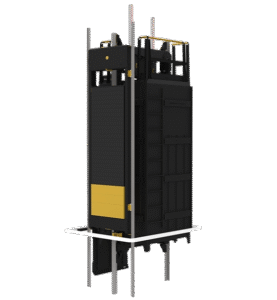

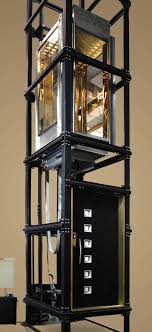
To fully understand the advantages of hydraulic elevators, you must first be familiar with all aspects of this system, including its common applications, efficiency, pricing, various models, and other critical factors. Due to their numerous features and benefits, hydraulic elevators are an ideal choice for low-rise buildings. While they offer many pros, they also have specific drawbacks. Read this article to the end to learn more about the unique characteristics and components of hydraulic elevators.
Definition of a Hydraulic Elevator
The safety of a hydraulic elevator, which is considered one of its primary advantages, stems from its hydraulic mechanism that ensures high operational security. In terms of cost, selecting and installing this type of elevator is often more economical for customers than traction elevators. To move the cabin, a hydraulic elevator uses an oil pressure pump, a motor, and industrial valves to push oil into the cylinder and piston, ultimately driving the cabin’s movement.

A hydraulic elevator sources the energy needed to transport the cabin through hydraulic jacks. When the motor starts and rotates, it drives the hydraulic pump, pushing oil from the reservoir toward the jack, causing the elevator to ascend. Flexible hoses are used to enhance the system’s flexibility, leading to better productivity—another key advantage of hydraulic systems.
Key Advantages of Hydraulic Elevators
Thanks to their diverse benefits, hydraulic elevators have become a popular choice among customers for installation in various complexes. Before deciding on this system for your building, you should be aware of its positive features to make an informed choice. The main advantages of hydraulic elevators include:
- Suitable for various load capacities
- Easy installation within the elevator pit
- No need for a traditional machine room at the top of the shaft
- Reduced noise pollution
- Significant energy savings (especially during descent)
- High safety standards
- Requires minimal space
- High structural durability
- More cost-effective compared to traction elevators
- Lower maintenance and service costs
- Longer overall lifespan
Disadvantages of Hydraulic Elevators
While understanding the advantages, you should also be aware of the drawbacks. Despite their benefits, this system has two main disadvantages. First, there are limitations regarding equipment dimensions; using these elevators for many floors requires a very long piston, which in turn necessitates a deep shaft.

The second drawback is the system’s challenge in maintaining potential energy for high-rise travel. This energy is required for ascent, and without it, movement is limited. Therefore, these elevators are most efficient for buildings with a maximum of eight floors; usage in taller buildings significantly reduces their efficiency.
Hydraulic vs. Traction Elevators
The advantages of hydraulic elevators make them versatile for residential buildings, hotels, and hospitals. Compared to traction models, they have positive features such as simpler structural requirements. In many cases, hydraulic systems offer more flexibility in design and do not have some of the rigid structural constraints found in traction elevators.

However, having fewer constraints does not mean these elevators don’t require maintenance. While they may have fewer regulatory hurdles in some regions compared to traction lifts, they still must be regularly controlled and serviced. These factors contribute to making hydraulic systems a priority for many customers.
Limitations of Hydraulic Elevators
Despite the various benefits, there are limitations to consider. One is the height restriction; because these elevators use jacks, height is limited. For direct jacks, the limit is typically 22 meters, and for indirect jacks, it is about 28 meters.
Another limitation is speed. The maximum speed for hydraulic elevators is usually around 1 meter per second, whereas traction elevators can reach significantly higher speeds (up to 24 m/s in high-speed models). This speed gap is a notable disadvantage for hydraulic systems in high-traffic or tall buildings. Considering these pros and cons will help you decide whether to purchase this type of elevator.
Conclusion
The advantages of hydraulic elevators often outweigh the drawbacks for low-rise structures. To buy a hydraulic elevator, you must first understand the system’s needs and your building’s specifications. Cabin Plus Industrial Group is one of the leading providers offering high-quality, guaranteed hydraulic elevator services and solutions.