



Key Points in Purchasing Elevator Doors
The elevator car door is a door used to facilitate the entry and exit of people and loads from the elevator. This door is usually located in one or two parts, but at least one car door should be considered on each floor for the entry and exit of passengers.
The elevator car door can be designed in two ways: vertical opening (swing/hinged) and automatic. The vertical opening door typically opens in two parts, top and bottom, for people to enter or exit. This type of door moves on vertical rails and is opened and closed by a mechanical system.
The elevator car door can also be designed as an automatic door. In this case, the car door opens and closes automatically, and there is no need for manual manipulation to open and close the door. This type of door is usually controlled using sensors or control buttons and opens and closes automatically with electric operation.
The materials used in the construction of elevator doors significantly influence customer choices. Elevator component manufacturing companies offer various doors to provide diverse products in terms of appearance, price, and application. For example, steel and steel sheets are used as the main materials in constructing the panels and frames of elevator doors. With the increase in market demand and the adoption of safety solutions like laminate and tempered glass, all-glass doors have also been added to the range of door construction materials.
In purchasing an elevator door, safety and regulations related to the design and operation of elevator doors are very important to prevent unwanted accidents. In most countries, there are specific regulations and standards for the design and installation of elevator doors to ensure the safety and well-being of people.
Getting Acquainted with Elevator Door Operation
If you intend to purchase an elevator door, it is better to first become more familiar with how it operates. The operation of an elevator door is based on a system designed to work in coordination with the movement of the elevator. Below, we generally explain how the elevator door operates.
The first stage is the door opening. When the elevator reaches the desired level and stops, the elevator door opens so passengers can enter or exit. This function is usually controlled by the elevator control system located internally and externally.
After passengers enter or exit, the elevator door closes, and the elevator is ready to move. In this stage, the door drive system is engaged. Electric motors are typically used, which use gears to move the door towards opening or closing.
During the elevator’s movement, its door must be firmly closed to prevent people from accidentally entering the elevator shaft. To ensure door safety, systems such as door locks and safety sensors are used. These sensors usually use safety arms or lasers to stop and reverse the door if an object is detected in its path.
When the elevator reaches the desired level and stops, its door opens, and passengers can enter or exit. In this state, the elevator control system receives the stop signal, and the elevator door opens. This is generally done using sensors and door control systems.
Elevator Door Components
Familiarity with door-related components is important when purchasing an elevator door, as it helps you make a better decision. Elevator door components may include essential parts such as the door lock, as well as secondary parts like the drive and remote control. These components and accessories are very important for individuals who are selecting an excellent elevator door for their building, and by correctly recognizing these items, they can choose the best door for themselves.
Landing Door and Car Door
The landing and car doors of the elevator have different mechanisms that generally have a significant impact on the performance of automatic doors.
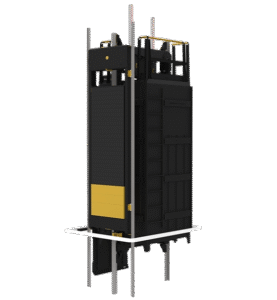
The mechanism of the landing doors includes various components used for the correct and safe movement of the landing door. These components may include electric motors, belts, sheaves or wire ropes, and the drive. Each of these components plays an important role in the operation of the landing doors and is essential for ensuring their correct and optimal performance. It is necessary to inquire about these items when purchasing an elevator door.
On the other hand, the car door must also have a movement mechanism. In different elevator models, car doors may have simpler components. But there is still a need for a mechanism to move the doors and ensure their correct operation.
Therefore, the mechanisms of the landing door and the car door differ. In the landing door mechanism, some of the car mechanism components, such as the electric motor, are absent, and the landing door is moved only by the operation of the car mechanism.
Door Frame, Panels (Lattes), and Outer Frame
Various elevator door components, including the panels (lattes), outer frame (char-choob), and frame, significantly affect the durability and appearance of the elevator door. The panels, as the large component of the door, play an important role when the mechanism is in operation and the door is opening, moving on the profile or the door mechanism belt by the sheaves.
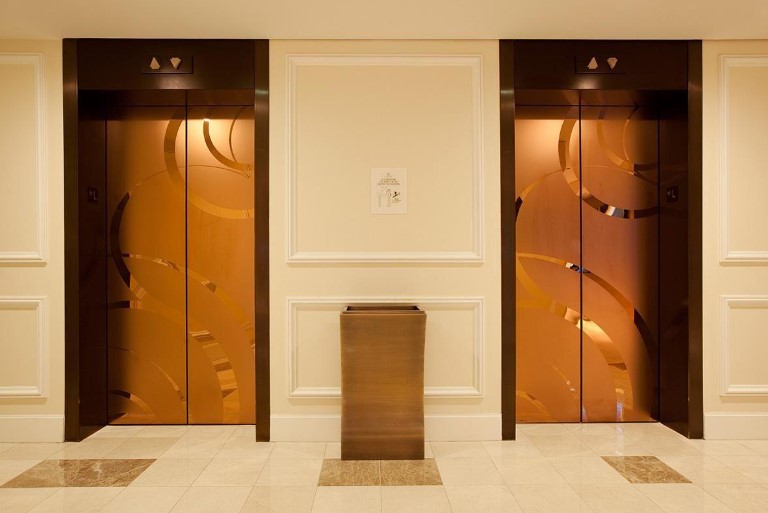
The frame and outer frame act as the separator between the wall and the panels and hold the elevator landing door. These components have a direct impact on the durability and appearance of the elevator door. Specifically, the panels can be designed with different patterns and colors. Panels are usually made of colored-coated steel, stainless steel, glass, solid stainless steel, or a combination of these materials.
Encoder
The encoder is a very important and effective component in increasing the quality of door opening and closing, improving accuracy, and facilitating elevator troubleshooting. The main function of the encoder in the elevator door is to detect door movement and is used to control the door’s position. Depending on the type of door and the door system, the encoder may be used in several different ways in the elevator door.
The purpose of using the encoder in the elevator door is to detect and control the door’s movement, maintain speed and prevent vibration during door opening and closing, precisely control the door’s position, and maintain load balance in the elevator system. Additionally, the encoder can be used for monitoring and controlling the door’s status, identifying faults and errors related to the door and its associated systems.
Pay Attention to These Tips When Purchasing an Elevator Door
We will review the do’s and don’ts of purchasing an elevator door below:
Checking quality and standards: It is of high importance that the desired elevator door complies with relevant standards and has valid certifications. This can ensure the correct operation and safety of the door.
Compatibility with the elevator system: The elevator door must be compatible with your elevator system. The dimensions, installation capability, and mechanism of the door must align with the needs of your elevator.
Strength and resistance: The elevator door must have a quality material and structure that provides the necessary strength and resistance against pressures, impacts, and daily use. The chosen materials for door construction must be of high quality and appropriate efficiency.
Easy installation and maintenance: When purchasing an elevator door, also note that the elevator door should have easy installation and maintenance capabilities. These features can reduce time and cost in initial installation operations and subsequent repairs, should component changes be needed.
Avoiding the purchase of an elevator door with excessive power and speed: Purchasing an elevator door with excessive power and speed may cause problems. A careful review of your elevator’s needs and structure is very important in selecting a door with appropriate power.
Price savings: Although the desire for financial savings is understandable, choosing an elevator door based on low price alone may only have short-term benefits.
A low-quality elevator door may create problems in performance, durability, and safety, and require frequent repairs. Therefore, when purchasing an elevator door, follow the balance between quality and price, and choose a door that is both of suitable quality and fairly priced.
Ignoring needs and taste: Every elevator and building has its own specific needs and conditions. When purchasing an elevator door, you should not ignore your tastes and needs. A careful review of your elevator’s needs, dimensions, and structure, examining and studying the specifications and features of the elevator door, and choosing a door that correctly aligns with your needs and taste, can be the best option.

What factors affect the purchase price of an elevator door?
Several factors can influence the purchase price of an elevator door. Some of these factors are mentioned below:
Material and quality of materials used: The use of high-quality materials with resistance to pressures and impacts can add to the price of the elevator door. For example, doors made of stainless steel-coated steel or glass usually have a higher price than doors made of simpler materials.
Size and dimensions of the door: The size and dimensions of the elevator door can also directly affect its price. Larger and customized doors with special specifications may have a higher price than standard doors.
Design and appearance: The design and appearance of the elevator door can also affect its price. Doors with a special and attractive design and style may have a higher price.
Technology and special capabilities: Elevator doors with special technologies such as automatic doors, touch-opening doors, or doors with advanced security systems have a higher price than simple doors.
Production and installation: The method and location of door production, the type and quality of installation, the availability of skilled labor, and the costs related to production and installation can also be influential and affect the final purchase price of the elevator door.
Ancillary features: The elevator door can also benefit from a variety of ancillary features. These features are provided to increase the security, comfort, and ease of use of the elevator. Paying attention to these features is also important when purchasing an elevator door.
Ancillary Features of the Elevator Door
Some of the ancillary features of the elevator door include:
Automatic door opening and closing system: This system allows the elevator door to open and close automatically, without the need for manual operation.
Presence sensors: These sensors enable the elevator door to automatically open and close if a person or object is near the door.
LED displays: These displays are placed on the elevator door and show information such as floors, elevator status, and emergency instructions.
Emergency call buttons: These buttons are for calling for emergency assistance in case of problems with the elevator.
Sound emitters (Annunciators): This ancillary feature is added to the elevator door to attract the attention of passengers by creating warning sounds.
Internal lighting: Some elevator doors have internal lighting that gives them an attractive and distinctive appearance.
Access control system: Some elevator doors are equipped with access control systems that only allow authorized individuals to use the elevator.
The use of each of these features depends on the goal and needs of individuals. Depending on the type of building and your needs, you can purchase an elevator door from reputable companies. In this regard, Cabin Plus Industrial Group will always be there to assist you, providing quality products that guarantee the correct operation of the elevator while enhancing the beauty and attractiveness of your building.