


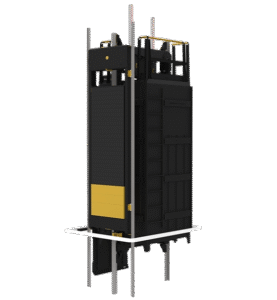


The use of elevator braking resistors has made the transport and movement of loads and people via elevators much smoother. Of course, this device is not only used in elevators but also has various applications in other machinery. Braking resistors and their different models are constructed from a tubular ceramic core, where the desired ohms and watts are achieved by winding the heating element around the ceramic. This component comes in various types and models, each with unique specifications and multiple benefits in different industries. Below, we introduce all the features, operational methods, pros, and cons of this product that you should know before purchasing.
Function of an Elevator Braking Resistor
The primary task of an elevator braking resistor is to assist the motor during startup and to manage the downward movement of the elevator. Another function of this component is to absorb the excess regenerative energy produced, preventing damage to the elevator system. An elevator requires two modes to operate: the motoring mode and the generating mode. The motoring mode handles the movement of heavy objects like the cabin, operating similarly whether lifting a full or empty cabin.

The generating mode works such that if there is weight in the cabin, it pulls it down, and if the cabin is empty, it pulls it up. in the generator state, the motor produces only frequency and voltage. The elevator braking resistor is utilized alongside the inverter setup. The connection between the braking resistor and the motor terminal is managed via a switch. As soon as an error warning is sent to and received by the system, the braking resistor quickly comes into action.
Types of Braking Resistors
Elevator braking resistors come in diverse models used in various settings based on their functionality. The most important braking resistors include those for elevators, escalators, inverters, load resistors, crane braking resistors, and more. In terms of models, braking resistors include various samples such as DEG, BEG, and GWG resistors, each having its own specific characteristics.
Buying an Elevator Braking Resistor
Since this is one of the main components of an elevator and its presence is essential for motor activity, most centers providing elevator construction, sales, and spare parts services offer this component. Ensure that you purchase an original and high-quality elevator braking resistor so that no issues arise during the elevator’s operation.

When purchasing an elevator braking resistor, it is first necessary to become well-acquainted with its performance, advantages, and disadvantages to ensure a correct and safe purchase. Keep in mind that buying a low-quality, cheap part does not necessarily mean getting a good deal. Investing sufficient care and budget in this area is an effective step that increases the component’s lifespan and improves the entire elevator system after purchase.
Important Tips on Elevator Braking Resistors
One key tip is the method of calculating and measuring the elevator braking resistor: the larger the load and the higher the deceleration speed, the more power is dissipated. Another point is to use original and high-quality parts when buying to ensure the device’s reliability. Furthermore, periodic and regular servicing of this component by an experienced and knowledgeable technician is vital to detect any malfunction or disruption early for repair or replacement.

To determine the right elevator braking resistor, we must analyze three factors: the amount of energy per stop, the ohmic resistance value, and the duty cycle. The energy per stop and the duty cycle are combined and measured as the resistance power. Assessing the resistance of this device helps balance its usage and the expected workload with its actual capacity.
Different Resistor Models
One type of elevator braking resistor is the inverter resistor, which operates during short intervals and converts the electrical energy generated by braking into heat. Another type is the dynamic braking resistor, also known as a brake resistor, used in motion systems where a drive controls and manages the motor. This type is applicable for both AC and DC motors. These are just two examples, but you should know that a wide spectrum of resistor types exists.
Conclusion
We discussed one of the vital components in elevators: the braking resistor, noting that it is designed and supplied in various types and models. Types include resistors for elevators, inverters, escalators, cranes, and more. You can purchase high-quality and reliable models of this component from reputable centers like Cabin Plus Industrial Center and benefit from their excellent after-sales services. Buying a quality model significantly helps increase the lifespan of the component and the elevator itself.