


Hospital Elevator Cabin — Comprehensive Guide on Selection, Design, and Standards
Published: November 10, 2025 — This article serves as a practical technical guide for engineers, interior designers, hospital managers, and contractors to make informed decisions about selecting, designing, installing, and maintaining hospital elevator cabins.
Introduction
In hospitals, specialized medical centers, and clinics, elevators are not just vertical transport devices—they are critical systems that directly affect patient care quality and emergency response times. Hospital elevator cabins must accommodate patients, stretchers, and medical equipment while maintaining high levels of safety, comfort, and hygiene. This guide covers all technical and design aspects for practical use in CabinPlus’s website content and by project managers or potential buyers.
Why Hospital Elevators Are Different
Hospital elevators must meet specific requirements that distinguish them from residential or commercial elevators:
- Stretcher Capacity: Spacious interiors and wide doors for easy entry/exit of stretchers with IVs, monitors, or other medical devices.
- Speed and Priority Control: Ability to prioritize emergency calls for rapid patient transport.
- Hygienic Standards: Materials and finishes should be disinfectable with minimal bacterial accumulation.
- Reliability: Components must be durable and serviceable for continuous operation.
- Access Control and Security: Restricted access to sensitive floors and integration with hospital alarm and fire systems.
Types of Hospital Elevator Cabins and Applications
Hospital cabins are classified according to usage and project requirements:
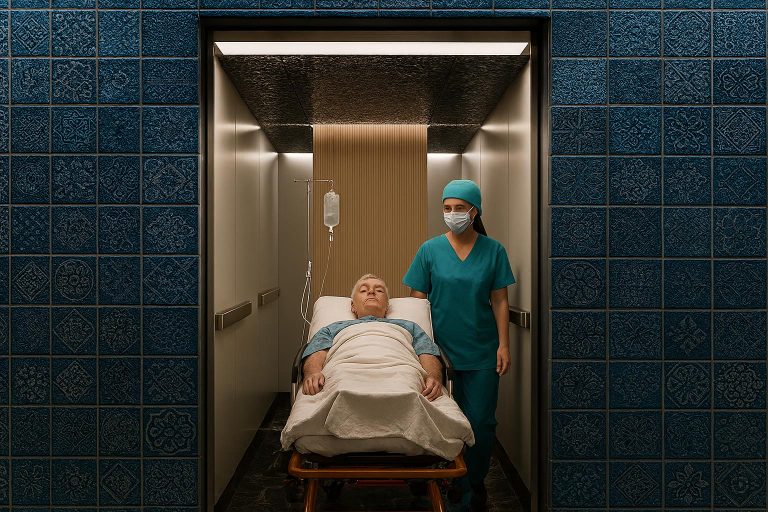
1. Stretcher Elevator
Designed for transporting hospital beds, typically with internal widths of 110–125 cm and depths of 200–220 cm. Wide doors and precise control systems ensure smooth floor-level stopping.
2. Service/Utility Elevator
Used to transport heavy medical equipment, cleaning supplies, and support materials, with higher weight tolerance than standard residential elevators.
3. Priority/Emergency Elevator
Designed for rapid patient or staff transfer during emergencies, sometimes with automatic protocols for lighting and ventilation adjustments.
4. Hybrid Cabin
Combination of stretcher and passenger cabin for hospitals with limited space or budget. Designed to minimize usage conflicts.
Hospital Elevator Cabin Design Principles
Design must balance functionality and user experience:
a) Geometry and Access
Dimensions and door width must allow easy stretcher and equipment movement. Floors should be slip-resistant and durable.
b) Lighting and Visibility
LED lighting with appropriate CRI ensures accurate visibility of patient skin and clinical signs.
c) Ventilation and Contamination Control
Proper ventilation, replaceable filters, and antibacterial coatings facilitate easy cleaning and hygiene.
d) Control Panel Placement
Panels must be at ergonomic heights, with emergency buttons, status indicators, and power backup displays.
e) Patient Comfort
Soothing interior colors, low-noise finishes, and communication with staff enhance patient experience.
Dimensions, Capacity, and Technical Specifications
| Criteria | Recommended | Notes |
|---|---|---|
| Internal Width | 110–125 cm | For stretcher clearance and maneuvering space |
| Internal Depth | 200–220 cm | Especially for stretchers with attached devices |
| Door Width | 90–110 cm | Wide or double doors for special needs |
| Weight Capacity | 600–1300 kg | Depends on patient load or equipment |
| Speed | 1.0–1.6 m/s | Lower speed prevents sudden movements for patients |
Materials and Finishes
Selection of wall panels, floor, handles, and control panels must ensure hygiene, impact resistance, ease of cleaning, and long service life.
Floor
Industrial vinyl, resistant laminate, or epoxy/resin floors. Must be slip-resistant, chemical-resistant, and replaceable.
Walls
Matte or mirrored stainless steel with anti-fingerprint coating, antibacterial composites, or HPL panels. Matte stainless steel preferred for easy cleaning.
Control Panels and Handles
Waterproof touch buttons or panels that can be disinfected, with handles easy to sanitize. Consider unified surfaces to reduce contamination transfer.
Lighting
LED with uniform distribution, suitable CRI, and appropriate IP rating for moisture and cleaning resistance.
Accessibility and Medical Equipment Handling
- Automatic full-opening or double doors for stretcher access.
- Enough interior space for rotating equipment like respirators or portable monitors.
- Attachment points to secure equipment during transit.
- Control panels enabling emergency operation inside and outside the cabin.
- Emergency lighting and backup power.
Standards and Safety
Mechanical Safety Systems
Emergency brakes, overload cut-off, door locks, and floor contacts to prevent movement while doors are open.
Electrical and Control Systems
Panels with error logging, backup operation, and isolation to prevent interference.
Power Backup and UPS
Connection to emergency power ensures patient transport continues during power outages.
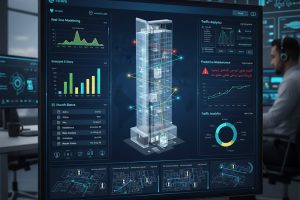
Monitoring and Reporting
Online systems monitor performance, log maintenance, and alert staff to minimize downtime.
Installation and Structural Coordination
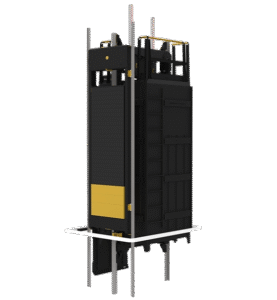
- Check shaft dimensions for cabin compatibility.
- Ensure motor room space or select MRL system if space-limited.
- Maintain service access paths without disrupting hospital operations.
- Coordinate with ventilation and building systems for proper airflow.
- Schedule installation during low-traffic hours or in new sections.
Maintenance and Periodic Service
- Weekly/monthly inspection of doors, locks, lights, and buttons.
- Periodic technical servicing: mechanical adjustments, brake and cable checks.
- Regular disinfection with material-compatible cleaning agents.
- Staff training on emergency use and warning recognition.
- Ensure access to spare parts and quick after-sales service.
Cost Estimation and Economic Analysis
Total project cost includes equipment, installation, structural modifications, power and backup, and annual maintenance. Consider operational costs and downtime impact. A higher initial investment with lower maintenance may be more economical long-term.
Case Study and Product Example
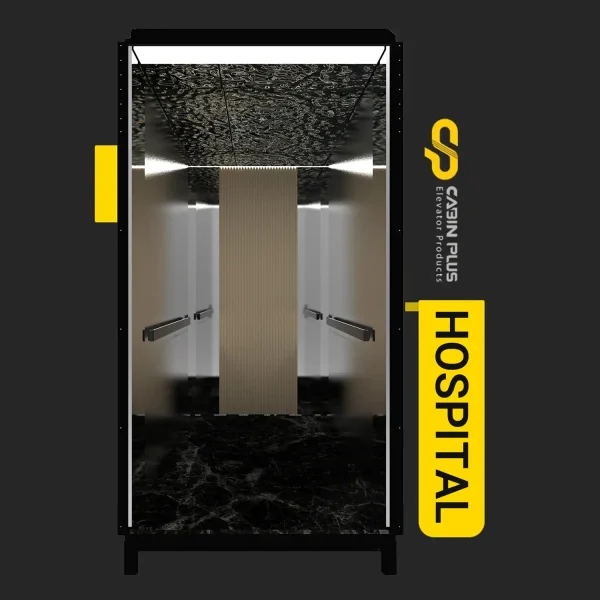
The Hospital Model Elevator Cabin is designed to meet typical hospital requirements, featuring stretcher capacity, disinfectable finishes, and emergency prioritization options.
View Hospital Elevator Cabin Product
Conclusion
Hospital elevator cabins are vital infrastructure requiring engineering, user-centered design, and hygiene standards. Attention to dimensions, disinfectable finishes, backup systems, priority operation, and routine maintenance ensures maximum ROI. For customizable solutions, visit the Hospital Elevator Cabin product page.
FAQ
1. Standard dimensions for stretcher elevators?
Typically 110–125 cm wide and 200–220 cm deep. Larger sizes may be required depending on equipment.
2. Does the cabin require separate emergency power?
Recommended to connect to UPS or hospital emergency power for uninterrupted operation.
3. Suitable wall finishes?
Matte stainless steel or antibacterial HPL panels that are easy to clean.
4. Can the cabin be connected to BMS?
Yes, for priority control, monitoring, and logging.
5. Annual maintenance cost?
Depends on number of elevators, usage intensity, and service contracts; typically 5–15% of initial cost annually.