



There are numerous components in an elevator, each of which has a specific function. However, the elevator cabin or car, as the main section responsible for carrying loads and passengers, is of great importance. The cabin must have a beautiful and attractive appearance, as it has the most contact with passengers.
The cabin must ensure passenger safety effectively and, depending on the building space, comes in various types. Glass and metal are two of the best types of elevator cabins, which are mainly used in luxury and high-end buildings. If you are looking to obtain information about purchasing and pricing elevator cabins, stay with us until the end of this article.
What Is an Elevator Cabin?
With a little research about elevators or purchasing and elevator cabin prices and its components online, one can understand the details and variety of its parts. There are main and auxiliary components in an elevator, but the cabin is considered one of the main components.
The cabin is an enclosure designed for the safe transportation of passengers, cargo, or both between the floors of a building. By pressing the cabin buttons, passengers send commands to the elevator control panel, and the transportation operation proceeds across different floors.
The cabin capacity depends on its width, depth, and height, and the design of cabins is very important for maintaining safety and attractiveness. The usual height of elevators is about 190 cm, and in very tall elevators, the height exceeds 2 meters.
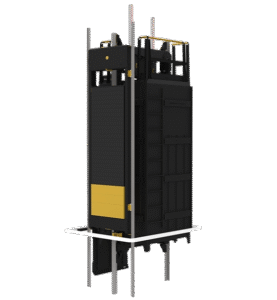
The main and essential components that form the elevator cabin include the yoke (frame), platform, and walls with various designs that are available on the market according to the designer’s taste. These sections shape the overall structure of the elevator cabin.
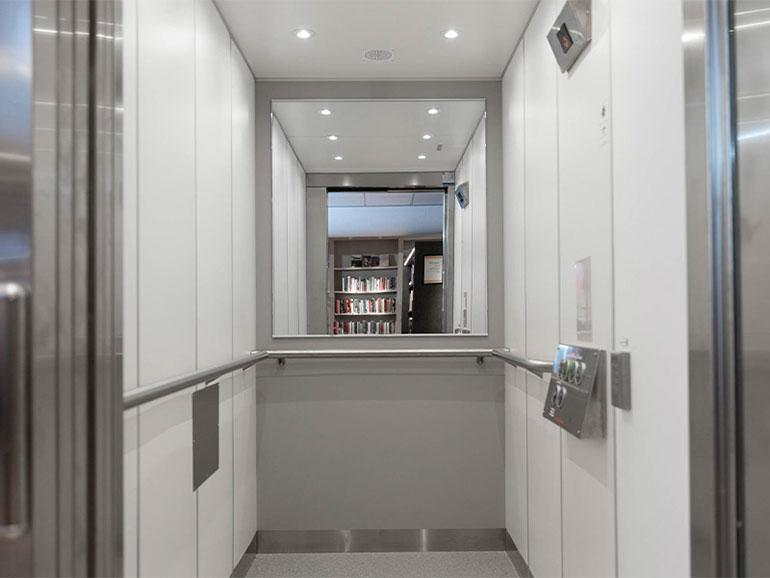
In addition, each cabin includes other accessories such as the ceiling, floor, door, handrails, buttons, display panel, music system, and more. These components are also produced in various designs, materials, and colors and consist of multiple parts.
To ensure the stability and strength of the elevator cabin, it is essential that all its mechanical components are properly designed and manufactured. The durability and strength of the cabin against forces applied during movement, or when using the safety brake, or when colliding with the pit buffers, are extremely important. Therefore, the elevator car, cabin yoke, guide shoes, floor walls, and ceiling of the elevator cabin must all be able to withstand applied pressures. This issue also affects the price of the elevator cabin.
How Is an Elevator Cabin Manufactured?
The method of elevator construction and the level of skill involved affect the price of the elevator cabin. Elevator companies are usually responsible for manufacturing the elevator cabin, and its installation is also carried out by these companies.
In designing an elevator cabin, customer preferences are also taken into account, and the design is carried out based on the selected materials. To manufacture and determine the price of an elevator cabin, its exact dimensions must also be obtained, which can be determined using the elevator cabin capacity table. In designing and manufacturing an elevator cabin, attention must also be paid to its strength and safety. Using high-quality materials and standard equipment can help ensure elevator safety.
Stages of Designing and Manufacturing an Elevator Cabin
To design an elevator cabin, the building traffic must first be examined, and the level of elevator usage must be estimated. Based on building traffic, the appropriate capacity for the elevator cabin can be calculated, and its dimensions can be determined. Also, by calculating the required number of elevators and determining their speed, the elevator cabin design can be improved.
While evaluating elevator traffic, terms such as elevator handling capacity, elevator waiting time, and nominal elevator travel time are used. Elevator handling capacity refers to the number of people who can be transported in a single elevator trip.
Nominal elevator travel time refers to the duration it takes for the elevator to travel between the first and last floors. Elevator waiting time is defined as the result of dividing the nominal travel time by the number of elevators.
When elevator traffic is evaluated, the appropriate cabin capacity is also determined. This capacity is usually between 4 and 21 people, but in some cases, it is better to increase the number of elevators to reduce waiting time.
When manufacturing an elevator cabin, attention must be paid to the shaft dimensions so that the cabin dimensions are compatible with it. These dimensions must be such that the cabin fits easily into the shaft and does not collide with the shaft walls during movement. Also, sufficient space must be considered for installing elevator accessories.
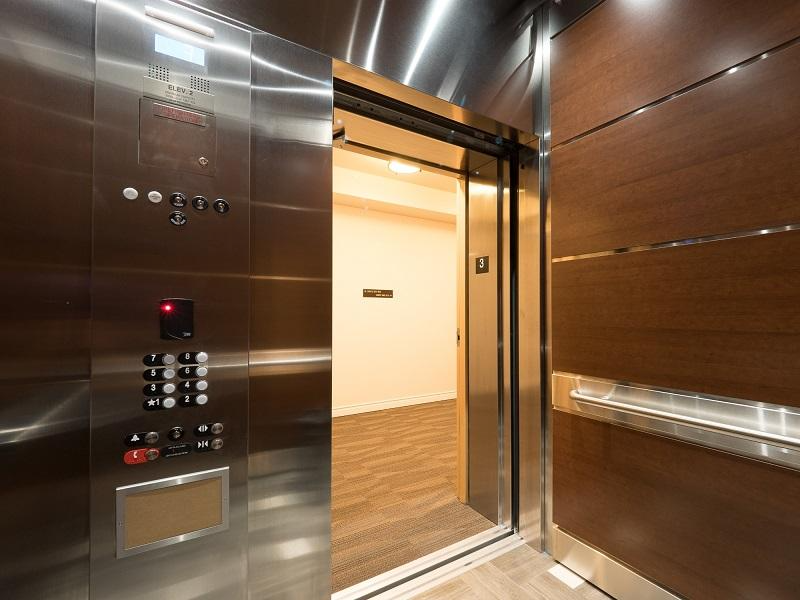
To manufacture the elevator cabin walls, the desired material is selected by the customer. Materials such as glass, stainless steel, MDF, Formica, a combination of steel and MDF, and a combination of steel and Formica can be used. However, safety and standards must always be taken into consideration.
Before manufacturing the elevator cabin, drafting must be carried out. Various software tools are available for this purpose, which can be used to prepare a precise and detailed drawing. During elevator cabin manufacturing, special attention must also be paid to safety details.
This means that strong and durable materials must be used in the cabin structure and its components to properly ensure safety. The selection of walls, ceiling, floor, frame, and guide shoes of the cabin must be compatible with the elevator’s capacity and weight, and they must also be of high quality. The quality of the components used can affect the price of the elevator cabin.
How Is the Price of an Elevator Cabin Determined?
To determine the price of an elevator cabin, the following factors must be considered:
- Cabin dimensions and design: The dimensions and design of the elevator cabin are determined based on customer needs and preferences, and depending on these factors, the price of the elevator cabin will vary.
The impact of cabin size on elevator prices is also significant; smaller cabins occupy less space and require less preparation time, and are therefore usually more cost-effective. Of course, the type of elevator also affects the price; for example, a hydraulic lift will likely have a different price compared to a platform lift.
- Cabin construction materials: The type of materials used in cabin construction also has a major impact on its price; for example, steel, wooden, and other cabins have different prices.
- Cabin covering type: Choosing the type of cabin covering also has a significant effect on the price; for example, melamine, leather, glass, metal panels, and others have different prices.
- Number of stops: The number of stops also affects the price of the elevator cabin; each additional floor requires construction and control work, therefore increasing the number of stops increases the price.
- Cabin interior equipment: Interior cabin equipment such as lighting, decoration, and more also have a significant impact on the price of the elevator cabin.
- Cabin door: The type of elevator door is also one of the factors affecting the price of the elevator cabin; automatic doors have the highest prices.
- Cabin quality level: The quality level of the cabin also greatly affects its price; higher-quality cabins have higher prices.
- Travel distance: The height of the elevator is directly related to the distance it travels; therefore, the longer the distance, the larger the shaft, and consequently, higher costs will be required.
- Building structure: Building characteristics, such as the type of property (commercial or residential) and the required number of stops, are very important for elevator installation. For example, buildings that require more stops will have higher installation costs. Additionally, if cargo transport is needed, elevator installation equipment will also be more expensive.
Elevator Cabin Price List
As mentioned earlier, determining the price of an elevator cabin is done by considering several factors. The dimensions of the elevator cabin vary depending on passenger or cargo capacity. The length, width, and height of the cabin determine the amount of raw materials required.
The quality of raw materials is also important in elevator cabin manufacturing. In addition, the design and model of the cabin also affect pricing. Luxury cabins are more expensive compared to other models. The use of additional accessories and decorations also increases the price of the elevator cabin. In this regard, there is a specific standard for cabin dimensions, based on which pricing is carried out.
The price of elevator cabins is calculated separately from the price of other equipment such as the motor. When purchasing a complete elevator package, each part has its own specific price, and the cabin price forms a portion of the total elevator cost.
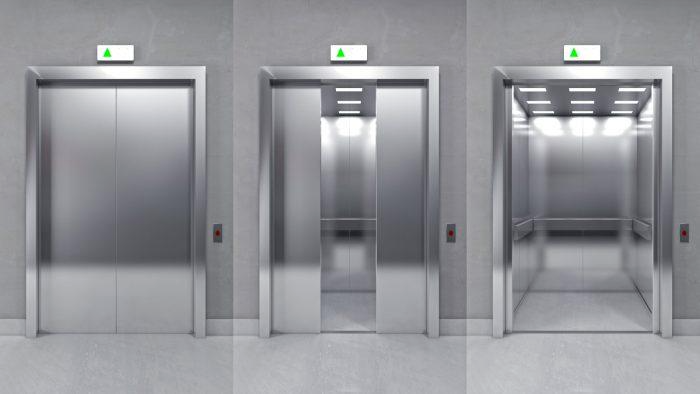
The price of an elevator cabin is determined based on its technical specifications and visual features. Cabin prices vary based on the materials used in construction and the maximum load capacity. Larger elevator cabins, luxury elevator cabins, and elevators made from premium and high-grade materials generally have higher prices. For example, an MDF-steel cabin with a capacity of 6 people costs around 33 million, while a 6-person glass cabin costs around 90 million.
From another perspective, the elevator cabin price list can be defined based on cabin dimensions in centimeters. Elevator cabin height, door size, and the opening and closing mechanism of the door also affect these prices.
Additionally, reviewing elevator cabin prices from a technical specifications perspective includes elevator cabin ventilation systems, emergency exit hatch, emergency power system, in-cabin telephone, and lighting equipment inside the elevator cabin.
Also, the elevator cabin price list is related to flooring and wall design. Elevator cabin flooring can be luxury or simple. An elevator cabin that features mirror work and exceptional lighting is more expensive than elevators that are simply made of stainless steel.
Factors Affecting Elevator Cabin Renovation Costs
The factors affecting elevator cabin prices, renovation costs, and cabin decorations are diverse. An elevator renovation project in a building may include technical and mechanical renovation or cabin decoration. In some cases, renovation is necessary due to damage caused by improper use, such as broken panels and damage to the control panel. To find out the approximate cost of elevator renovation and elevator cabin renovation costs, the following actions should be considered:
- Renovation of worn-out and old cabins
- Replacement of floor control panels
- Installation of stainless steel panels
- Stainless steel finishing of the elevator cabin
- Installation of elevator door covers
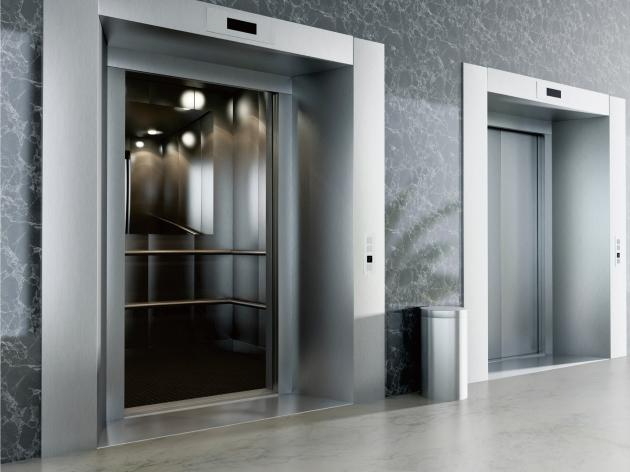
The materials used play a decisive role in the price of the elevator cabin and its renovation. Other materials used in elevator cabin renovation include MDF and Formica, which are less expensive compared to stainless steel. For low-cost elevator cabin renovation, these types of materials can be used.
In addition to periodic maintenance and servicing of elevators, the interior of the cabin also requires repair and renovation. The price of elevator cabin renovation must be calculated by specialists in this field, and your taste also affects the estimation.
In many cases, interior cabin design is based on old models and is not compatible with modern tastes. In such cases, before replacing the entire cabin, low-cost renovation can be considered.
The location of the building also affects the estimation of elevator cabin renovation costs. The cost of renovating an elevator cabin in a luxury high-rise building is higher than that of a standard building with a maximum of five floors.