


Inclined elevators are among the types of lifts frequently used by individuals with physical and mobility challenges. These elevators are utilized in various administrative, recreational, and commercial locations, significantly aiding and speeding up the transport of people. They are an ideal option for places where installing a standard vertical elevator is impossible due to steep slopes. Before purchasing this type of elevator for different uses, it is essential to be familiar with all its aspects. Below, we highlight the various benefits and features of these elevators.
What is an Inclined Elevator?
The construction of inclined elevators typically involves a rail and a seat or cabin attached to that rail. While they make transportation easier for those with mobility issues, they are also used in industrial and commercial settings. Based on their operation, they are divided into five categories: traction, hydraulic, winch, magnetic, and construction (hoist) inclined elevators.

Hydraulic inclined elevators are often used for residential buildings, offering benefits such as ease of repair, long lifespan, and smooth movement. Another type is the construction inclined elevator, used to speed up building projects with capacities ranging between 1, 1.5, and 2 tons. In terms of components, inclined elevators are quite similar to standard elevators and do not have major structural differences in their core parts.
How Inclined Elevators Work
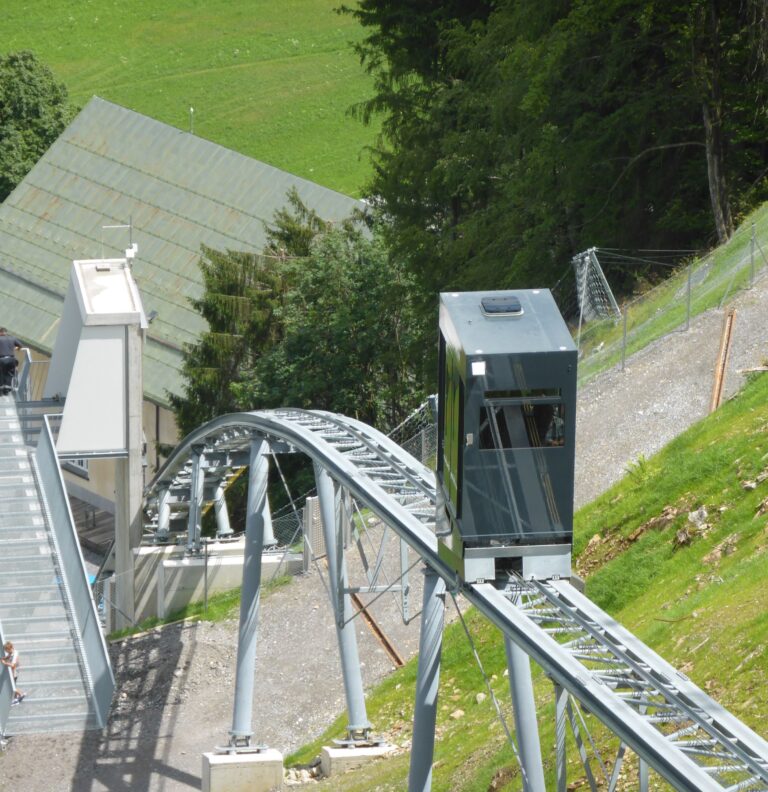
Using inclined elevators is recommended for non-vertical paths with a slope; in fact, these elevators act as an alternative or extension to escalators. In this system, the wire ropes and the drive motor allow the cabin to move diagonally along the sloped surface. These elevators utilize internal and external wheels for movement, often constructed from aluminum and steel. The power required for movement is supplied by electric motors and electronic pressure controls.
Pros and Cons of Inclined Elevators
The advantages of inclined elevators include their versatility for various applications. One common use is in recreational and tourist areas located on hills or mountains. They are also highly practical for locations where there isn’t enough space for a traditional vertical elevator shaft.

However, inclined elevators do have drawbacks, such as a more difficult installation process. Maintenance and servicing require complex, specialized skills and cannot be handled by just anyone. Another disadvantage is their relatively low speed compared to vertical systems. Understanding these features helps buyers make an informed decision based on their specific goals.
Dimensions of Inclined Elevators
Since inclined elevators are frequently used for transporting disabled individuals, their dimensions must be compatible with wheelchairs. The cabin size should typically be around 14×11 units. Necessary features include a floor-leveling system for those with mobility issues and a specialized button to keep the doors open longer than standard elevators, allowing wheelchair users to board more easily.
Maintenance of Inclined Elevators
Due to the critical role of inclined elevators, they must be regularly and permanently inspected by a specialized technician. Detecting minor faults early prevents larger failures. Since these systems are more complex than standard lifts, the service technician must have sufficient technical knowledge to avoid damaging the specialized components.

Another preventive measure is to purchase the elevator from a reputable center with excellent after-sales service. Using original parts in the elevator’s structure significantly increases its lifespan. Therefore, investing appropriately in quality at the beginning is a vital step in long-term maintenance.
Conclusion
Inclined elevators are practical tools that assist disabled individuals and provide efficient transport on sloped terrains. They are categorized into traction, construction, hydraulic, and other models. Maintenance should be entrusted to experienced professionals with specialized knowledge. For a reliable purchase and installation in residential, commercial, or recreational centers, you can contact Cabin Plus Industrial Center, a reputable leader in elevator services. Buying from a trusted center prevents recurring repair costs and ensures long-term reliability.