Certainly! I will translate the Persian text into English, keeping the codes intact and ensuring the images are center-aligned.
Advantages of Ordering a Sliding Elevator Door
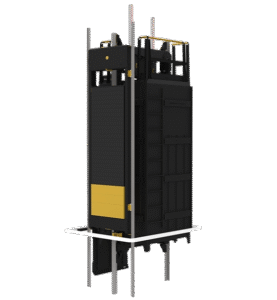
In elevators found in residential buildings, commercial buildings, hotels, and even some elevators used in factories for carrying cargo, and hospitals for transporting patients along with beds and related equipment, important details can include the cabin and its doors.
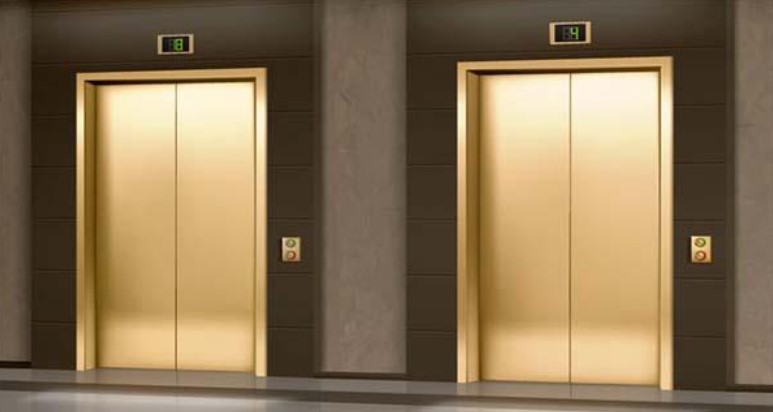
The appearance of the cabin and the entrance and exit doors, depending on the type of building, can be varied and eye-catching. For instance, in luxury and multi-star hotels, the cabin and doors are made of colored and mirrored stainless steel, or in large commercial and tourist centers, glass cabins and doors are used.
Elevator doors, besides their functional role in opening, closing, and the entry and exit of people, also play a significant role in the safety of elevators. These doors must have motion safety systems that automatically stop the elevator’s movement in case of any danger. Furthermore, they must have suitable mechanical strength to withstand the pressures and impacts that occur during the use of the elevator.
Companies manufacturing elevator doors must adhere to recognized safety standards and relevant regulations. Also, the design and construction of these doors must consider factors such as ease of use, durability, and resistance to wear and corrosion. Since elevator doors are also visually apparent, an attractive design that is compatible with the surrounding space is also very important.
Fortunately, in our country, reputable and well-known companies are active in the field of automatic elevator door production. These companies manufacture and sell sliding and center-opening elevator doors in the domestic market. The installation and commissioning of elevator doors are carried out during the rail installation phase, and due to the responsibility for people’s safety, these doors are highly significant.
For use in elevators, sliding doors are more frequently utilized than center-opening doors. Typically, on floors, hinged doors are used for elevators and semi-automatic doors for the cabin, or fully automatic doors are used for both the floor and cabin sections. In this article, we will examine the sliding elevator door; therefore, if you intend to order a sliding elevator door, be sure to read this article to the end.
What is a Sliding Elevator Door and What are its Features?
Before ordering an elevator door, it is necessary to become more familiar with the specifications and features of this door. When installing and commissioning an elevator with automatic doors, two types of doors are used, which operate in completely different ways.
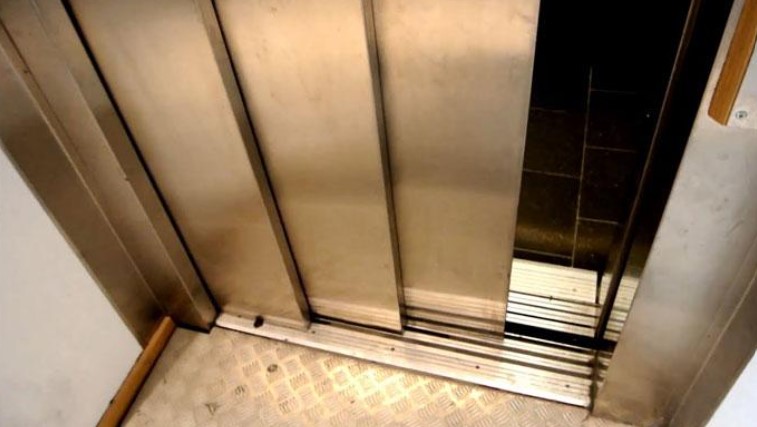
One type of door is the sliding or telescopic elevator door, which opens and closes from one side to the other. In contrast, the center-opening elevator door opens and closes from the middle to both sides.
In various elevator installation and commissioning projects, elevator doors are designed and used as right-opening or left-opening. Sliding elevator doors usually have a metallic structure and are connected to the ceiling and floor of the elevator using appropriate rails and mechanisms.
In a sliding elevator door, its components include the frame, contact, door shoe, door sill, and panels (lites). Generally, in automatic doors, a special motor is used for the opening and closing operation, which is connected to the elevator controller and operates according to its specific safety and technical principles. The electric motor rotates a wheel connected to a metal arm, and the metal arm is connected to the door by another arm. Finally, the door moves on a metal rail and slides back and forth.
Sliding doors are considered the best doors in terms of safety for elevators. One of the important points in ordering a sliding elevator door is paying attention to the fact that the parts used in this type of door must be of very high quality; otherwise, the useful life of the door decreases, leading to the failure and damage of other components.
One of the benefits of sliding doors is their greater speed compared to hinged doors. In choosing doors for the floors, hinged or sliding doors can be used, but for the cabin door, a sliding and automatic door must necessarily be used.
It is better to refer to reputable and well-known agencies and companies for purchasing elevator components and make a decision after receiving sufficient information about ordering a sliding elevator door or other types of doors.
Important points in ordering a sliding elevator door
Ordering a Sliding Elevator Door and Getting to Know Its Types
To order a sliding elevator door, you can choose different types of this door according to your desire and need. But before deciding, it is necessary to become familiar with the features of each model of sliding elevator door. In this section, we will introduce the types of sliding doors and examine each one so that you can make a better decision in this regard.
Ordering a Telescopic Sliding Elevator Door
One example of automatic sliding doors is the telescopic model, which can be used for the floors or the elevator cabin. This type of door can open from one direction and, depending on the position of the door relative to the building entrance and wall, allows opening and closing from left to right or from right to left. A major difference between a hinged and a sliding elevator door is the coordination between the landing door and the car door, which exists in all types of sliding doors. If the landing door is single-panel, the car door is considered telescopic.
Ordering a Center-Opening Sliding Elevator Door
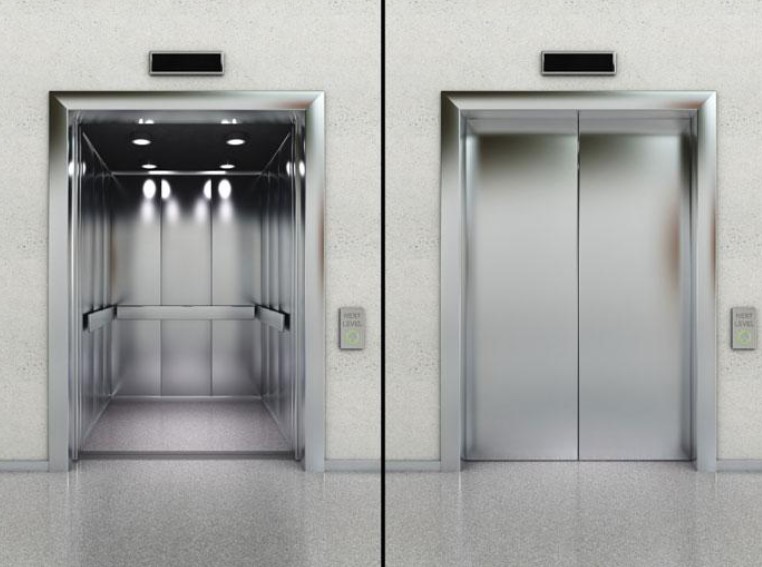
Another option for automatic sliding doors is the center-opening model, which can be suitable for use on floors or the elevator cabin. This type of door can have two or four panels and opens and closes symmetrically from the middle.
If the landing door is two-panel, a four-panel center-opening door will be used for the cabin. Furthermore, if both the landing door and the car door are fully automatic and both are center-opening, considering the difference between hinged and sliding elevator doors, there will be coordination between the two doors, and they will open and close simultaneously and automatically.
Ordering a sliding elevator door in different models
Ordering a Sliding or Hinged Elevator Door; Comparing the Differences
So far, we have provided information about ordering a sliding elevator door and its types. In this section, we intend to compare sliding and hinged elevator doors and mention their differences.
It cannot be said which of these two types of doors is better; as this depends entirely on the financial budget and the client’s preference, and ultimately, the type of hinged or sliding elevator door will not have any fundamental difference, only their method of operation is different. Below, we briefly explain the differences between hinged and sliding elevator doors. Stay with us.
Difference in the Operation Method of Hinged and Sliding Elevator Doors
In all types of fully automatic elevator doors, both the landing door and the car door open and close simultaneously and automatically. However, the hinged landing door must be opened by the passenger with manual force, and this can be problematic for children, the elderly, and people with disabilities. For high-traffic buildings, the use of fully automatic doors is also appropriate, and in fact, ordering a sliding elevator door is recommended.
Speed of Door Opening and Closing
If a hinged landing door is used, its opening and closing time is uncontrolled, often causing delays for passengers and reducing the flow of traffic. Sliding doors operate more smoothly and have greater speed and order.
This might be the fundamental difference between hinged and sliding elevator doors. Also, center-opening sliding doors require less time to open and close compared to telescopic sliding doors, and consequently, center-opening doors operate at a higher speed, which is easier for specific individuals such as children, the elderly, and people who use wheelchairs. Of course, in sliding doors, the opening and closing speed can be adjusted.
Space Saving
Hinged doors require less width space due to having only one door and frame. However, when opening and closing, they occupy more space in the corridor because they create a 90-degree angle with the wall. Sliding doors, in comparison, do not occupy any space in the corridor and have a greater advantage in this regard.
Manufacturing Technology
In selecting the elevator door system, three aspects are considered: technical, safety, and aesthetic decorations of the elevator. While quality and safety are important, having an attractive and beautiful appearance is also very crucial. One of the features of automatic doors is their smooth and silent movement, which is achieved through principled design, using high-quality and premium raw materials, a belt drive system, a DC motor, and PWM motor speed control. One of the fundamental differences between hinged and sliding elevator doors is the automatic detection of obstacles and alerting the elevator control panel.
Difference in Price
Hinged elevator doors, which are the simplest and cheapest type of landing door, have a more suitable price due to fewer electronic components and having one door and one frame, and are more suitable for buildings with low traffic. However, the main factor in the difference between hinged and sliding elevator doors is their finished price.
Automatic sliding doors, due to advanced manufacturing technology, high quality and smooth movement, the ability to make the car door symmetrical with the landing doors, saving time on opening and closing, the possibility of simultaneous opening of two panels during inspection, superior comfort and performance, and integrated system (reclosing), reliability with tested and proven components, and more, have higher prices.
Therefore, ordering a sliding elevator door depends on the needs and characteristics of the building. If you are looking for more advanced technology and greatly value the modern appearance of the building, a sliding elevator door will be a more suitable option for you.
Ordering a sliding and hinged elevator door
Important Points in Ordering a Sliding Elevator Door
Before ordering a sliding elevator door or other types of doors, be sure to pay attention to the following:
Material: Depending on your preference and intended use, you can use stainless steel, glass doors, etc. Each of these materials has a different appearance and characteristics. The quality of the materials used in door construction is very important.
Design and Appearance: For the elevator door, you can choose a design and appearance that is compatible with the style and decoration of the building. This includes color, patterns, designs, and decorations.
Safety: When choosing an elevator door, you must ensure its safety aspect. The door must have safety systems such as sensors and suitable locks.
Rules and Regulations: When ordering an elevator door, you must be familiar with the relevant rules and regulations and ensure that your desired door is compatible with the relevant standards.
Cost: Finally, determine your budget and estimate the cost based on the type and features of the door.
In conclusion, note that in choosing elevator doors, besides the importance of quality aspects and safety, other criteria are also important, including comfort, low noise, and high speed. Before ordering a sliding elevator door and other types of doors, it is best to consult with specialists in this field. The Cabin Plus Industrial Group, with its brilliant background and experienced and professional experts, is ready to serve you and provide technical consultations.