

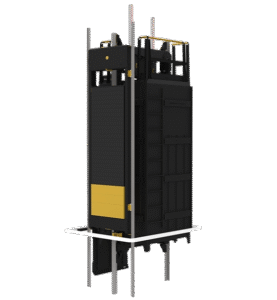

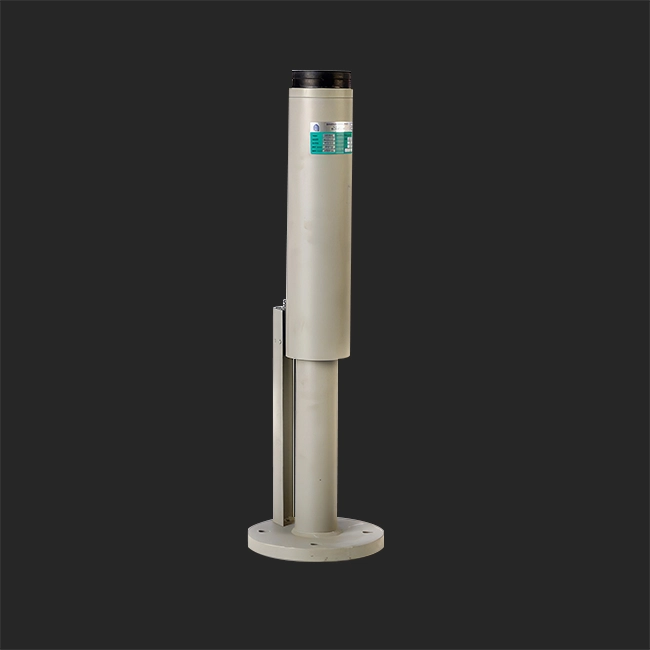
Hydraulic Elevator Buffer
The hydraulic elevator buffer is a critical safety component that prevents damage to equipment and passengers. Installed at the lowest point of the elevator shaft, it absorbs kinetic energy from the cabin or counterweight during high-speed conditions or sudden power loss, preventing severe impacts.
Application and Function of Hydraulic Elevator Buffers
Hydraulic buffers convert kinetic energy into heat using hydraulic fluid, absorbing shocks from the cabin or counterweight in a smooth and controlled manner. They operate primarily when the cabin reaches the end of its vertical path, especially during emergencies or if the main braking system fails to stop the cabin completely.
Difference Between Hydraulic Buffers and Other Types
- High energy absorption: Hydraulic buffers can absorb more energy compared to spring or polyurethane buffers.
- Smoother stop: The hydraulic fluid allows gradual and controlled deceleration.
- Suitable for high-speed elevators: Commonly used in elevators exceeding 1 m/s.
Advantages of Using Hydraulic Buffers
Hydraulic buffers excel at absorbing shock energy, reducing risks from sudden stops or brake failures. They also have longer service life and superior durability under harsh environmental conditions compared to other buffer types.
Installation and Maintenance
Proper installation should be performed by qualified technicians. The buffer is typically installed at the bottom of the shaft, in line with the cabin or counterweight path. Regular checks of hydraulic fluid levels and cylinder performance are essential. Any oil leakage or decrease in shock absorption efficiency requires immediate repair or replacement.
Key Considerations When Selecting a Hydraulic Buffer
- Cabin capacity compatibility: Choose a buffer rated for the cabin’s passenger load and weight.
- Speed range compatibility: Each buffer is designed for a specific speed range.
- Safety standards: Ensure the product meets relevant international safety certifications.
Technical Specifications of Hydraulic Elevator Buffers
| Specification | Details |
|---|---|
| Buffer Type | Hydraulic |
| Installation Location | Bottom of the elevator shaft (under cabin or counterweight) |
| Energy Absorption System | Hydraulic fluid |
| Suitable For | High-speed and heavy-duty elevators |
| Emergency Function | In case of brake failure or sudden fall |
| Features | Smooth stop, high energy absorption, reliable performance |
Conclusion
Hydraulic buffers are vital for elevator safety, ensuring soft stops and reducing sudden impact forces. They are especially recommended for high-capacity, high-speed elevators. Selecting a reputable brand, proper installation, and regular maintenance are crucial for optimal performance and safety.