





T127 Elevator Rail – The Best Choice for Heavy and Car Lift Cabins
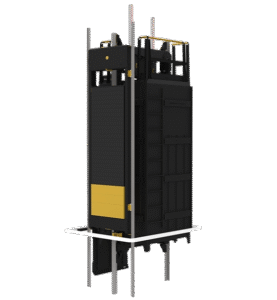
One of the most critical structural components in elevator systems is the elevator rail. This vital part ensures safe and stable guidance of the cabin and counterweight within the elevator shaft. The T127 elevator rail is designed for situations where the elevator cabin is heavy or intended for car transport (Car Lift). Additionally, these rails are ideal for elevators with speeds above 2 meters per second.
Key Features of the T127 Elevator Rail
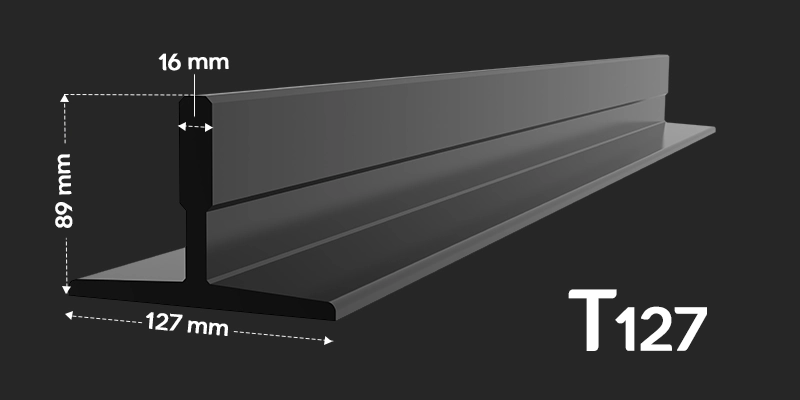
The T127 elevator rail, with its thicker and more robust structure, is a professional choice for large and specialized projects. Some important specifications of this rail include:
- Suitable for high-capacity applications such as hospital, industrial, or car elevators
- Usable at speeds above 2 meters per second
- Very low manufacturing tolerance and high surface quality
- Complete cabin stability along the travel path
- Suitable for conditions with heavy dynamic loads
Technical Specification Table for the T127 Elevator Rail
| Specification | Description |
|---|---|
| Model | T127 |
| Suitable For | Heavy-duty, hospital, or car lift cabins |
| Maximum Speed | 2 meters per second and above |
Cabin Guide Rail – Precision and Strength in Performance
The T127 elevator rail is highly suitable for use as a cabin guide rail in heavy-duty elevators. In this configuration, the rail is mounted on the shaft wall, and the cabin moves along it using guide shoes. The high thickness and industrial design of these rails effectively minimize vibration, bending, and noise.
Counterweight Guide Rail – Ensuring Stability Under Load Pressure
In high-capacity projects, the counterweight is also large and heavy. Using the T127 elevator rail as a counterweight rail increases stability and reduces unwanted lateral forces during movement. These rails provide excellent resistance against bending, stress, and friction.
The Importance of Using Standard Rails in High-Capacity Elevators
- Prevents deviation of the cabin’s travel path
- Enhances safety at high speeds
- Increases the service life of elevator mechanical components
- Maintains stability under heavy loads and industrial conditions
- Reduces wear on the cabin and counterweight guidance system
How the T127 Elevator Rail Differs from Other Models
Unlike lighter models such as T50 or T70, which are designed for residential or light-duty elevators, the T127 rail has a larger profile, greater thickness, and much higher dynamic load capacity. This rail is suitable for specialized projects, including car lifts, hospital beds, or industrial elevators.
Conclusion
If your project requires an extremely stable, durable, and precise movement system, the T127 elevator rail is the optimal choice. This rail is not only technically powerful but also competitively priced compared to imported products. For heavy-duty or high-speed elevators, selecting the right rail is a critical necessity that cannot be overlooked.
Other Recommended Products :