


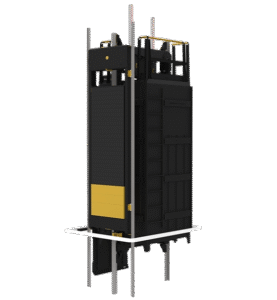



Single-Sheave Elevator Car Sling; A Technical Review of Performance and Advantages
An Introduction to the Single-Sheave Elevator Car Sling System
In the elevator industry, the Car Sling system is considered one of the most critical mechanical components. The car sling is a metal structure that serves as the supporting frame of the elevator cabin. In this article, we specifically examine the single-sheave elevator car sling, a model that is widely used in many projects due to its high efficiency and simple structure.
What Is a Car Sling?
Simple Definition and Application
A car sling is a type of metal structure that uses only one sheave (pulley) to guide the suspension ropes in the elevator system. This system is commonly used in projects with space or budget limitations, where optimal use of equipment is a priority.
Main Components of the Car Sling
The most important structural components include:
- Cabin Base Frame
- Vertical Supporting Uprights
- Pulley Shaft or Bushing
- Rope Guide Sheave
- Buffer Shoe Connections
- Guide Shoe Brackets
Difference Between Single-Sheave and Double-Sheave Car Sling
Performance Comparison
| Feature | Single-Sheave Car Sling | Double-Sheave Car Sling |
|---|---|---|
| Number of Sheaves | 1 | 2 |
| Rope Movement Geometry | Simpler and more direct | More complex with directional changes |
| Total Cost | Lower | Higher |
| Space Requirement | Less | More |
| Force Efficiency | Lower (compared to double-sheave) | Higher (reduced load on the cabin) |
Advantages of Using a Single-Sheave Car Sling
Why is this system widely used in projects?
Some key advantages include:
- Reduced manufacturing and installation costs
- Simpler design and maintenance
- Less space required inside the elevator shaft
- Suitable for low-traffic or low-rise buildings
Disadvantages and Limitations
Important considerations before choosing
Despite the listed advantages, the single-sheave car sling also has certain limitations:
- Higher load applied to the motor and suspension system
- Lack of balanced load distribution compared to double-sheave systems
- Increased wear on suspension ropes over long travel distances
- Not suitable for high-speed or high-capacity elevators
Applications of Single-Sheave Car Sling in Projects
This system is typically used in the following situations:
- Low-rise residential buildings
- Light-duty freight elevators
- Projects with limited budgets
- Environments with restricted installation space
Key Installation Considerations for Single-Sheave Car Sling
Tips to improve safety and efficiency
During installation, the following points are essential:
- Using a sheave with appropriate diameter and durable material
- Ensuring precise leveling of the frame and sheave mounting position
- Careful inspection of weld quality and component connections
- Checking the rope travel path for friction and excessive bending
- Using standard buffers at the bottom of the car sling
Maintenance and Periodic Service Tips
How to extend the system’s service life?
To maintain optimal performance of the single-sheave car sling system, the following actions should be carried out regularly:
- Inspecting the sheave for wear and corrosion
- Monitoring rope condition and replacing when necessary
- Checking connections and welds for cracks or failures
- Lubricating sheave bearings to reduce friction
Conclusion: Is a Single-Sheave Car Sling Right for Your Project?
If your project has the following characteristics:
- Low building height (under 5 floors)
- Low to medium capacity
- Budget or space limitations
Then a single-sheave car sling can be an ideal option. However, for large-scale or high-traffic projects, it is recommended to use more advanced systems such as double-sheave car slings.
Other Recommended Products :

