



Elevator Gearbox Motor: A Complete and Professional Guide
In the world of modern elevators, the elevator gearbox motor is considered one of the most critical components of the system. This motor not only drives the movement of the elevator cabin but also ensures smooth operation, safety, and energy efficiency. In this article, we aim to provide a comprehensive and professional discussion about elevator gearbox motors, covering technical details, types, advantages, disadvantages, as well as installation and maintenance guidelines.
1. What is an Elevator Gearbox Motor?
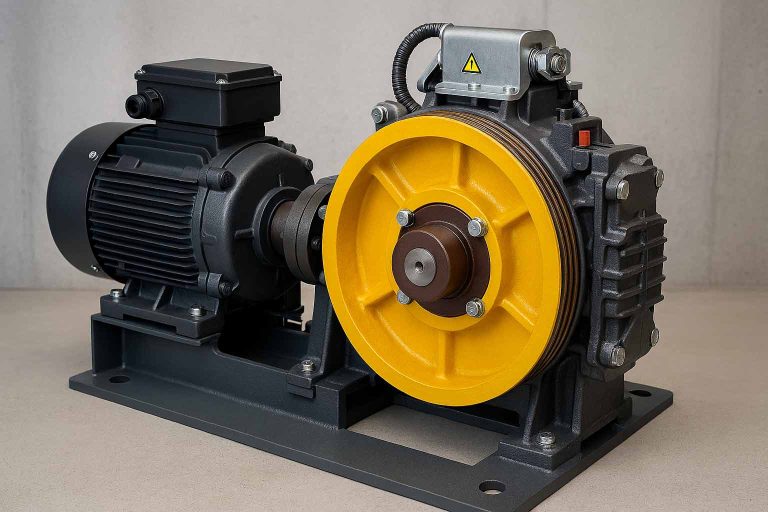
The elevator gearbox motor is a combination of an electric motor and a gearbox system (gears) that converts the motor’s speed and torque into suitable movement for the elevator cabin. Essentially, the gearbox reduces the motor speed and increases torque so the cabin moves smoothly and with precise control.
This motor is usually installed at the top of the elevator shaft and connected directly or indirectly to the cabin’s hoist ropes. Due to their simple structure and high reliability, gearbox motors are widely used in medium and heavy-capacity elevators.
2. Main Components of an Elevator Gearbox Motor
An elevator gearbox motor consists of the following parts:
- Electric Motor: Usually three-phase or single-phase, converting electrical energy into mechanical motion.
- Gearbox: A gear system that adjusts the motor’s speed and torque.
- Frame and Support Base: The structure that secures the motor and gearbox in place.
- Brake: For complete cabin stops at floors and to prevent unintended movement.
- Cable and Coupling: Mechanical connections between the motor and lifting system.
3. Types of Elevator Gearbox Motors
Elevator gearbox motors can be categorized based on gearbox type and technology:
- 3.1 AC Gearbox Motor
This type of motor uses alternating current (AC) for operation and is very common in traditional elevators. Its advantages include high durability, long lifespan, and low maintenance costs.
- 3.2 DC Gearbox Motor
Direct current (DC) motors are used for more precise speed control and smoother cabin movement. They offer greater speed adjustability and more energy-efficient operation compared to AC motors.
- 3.3 Gearless Motor
These motors do not require a gearbox and are connected directly to the traction sheave. Their speed and movement are smooth and precise, but their purchase and installation cost is relatively higher.
4. Advantages of Using Elevator Gearbox Motors
Despite the advancement of gearless motors, elevator motors remain popular for the following reasons:
- Affordable Price: Lower purchase and installation costs compared to gearless motors.
- Easy Maintenance: Their simple structure makes repairs and maintenance easier.
- High Load Capacity: Suitable for high-capacity elevators and tall buildings.
- Long Lifespan: With proper care, they offer extended operational life.
5. Disadvantages of Elevator Gearbox Motors
Despite their advantages, motors also have some limitations:
- Higher Energy Consumption: Consume more electricity than gearless motors.
- Noise and Vibration: The presence of gears generates more noise during operation.
- Need for Lubrication: Gearboxes must be periodically lubricated to maintain smooth operation.
6. Installation and Maintenance Tips for Gearbox Motors
To maximize the lifespan and performance of these motors, the following points are essential:
- Proper Installation: The motor should be installed exactly in the designated position and properly leveled.
- Regular Lubrication: Gearboxes must be lubricated periodically to reduce friction.
- Brake Inspection: Brakes should be checked monthly to ensure cabin safety.
- Rope Tension Adjustment: Proper rope tension is crucial for smooth and safe cabin movement.
- Vibration and Noise Control: Using anti-vibration bases and precise gearbox adjustment reduces noise.
7. Summary and Conclusion
The elevator motor gearbox is a key component in the lifting system, directly affecting safety, ride quality, and energy consumption. By selecting the correct motor type, performing proper maintenance, and following safety guidelines, a smooth, safe, and reliable elevator can be ensured. If you are looking for a guide to purchasing, installing, and maintaining an elevator gearbox motor, consulting the professional experts at Cabinplus can help you make the best choice.
We hope this article has introduced you to the elevator motor gearbox and provided valuable information on its types, advantages, disadvantages, and maintenance tips. By following these guidelines, you will have a safe, efficient, and quiet elevator.