


Comprehensive Guide to Elevator Management Systems: From Basic Concepts to Advanced Technologies
In today’s modern world, elevators are no longer just a means of moving between floors; they are considered an intelligent part of the building management ecosystem.
Why is an Elevator Management System Critical?
With the increasing height of buildings and complexity of commercial and residential towers, manual or traditional elevator management no longer meets the needs. An Elevator Management System (EMS) refers to a set of hardware and software responsible for monitoring, controlling, and optimizing the performance of one or multiple elevators.
Smart Architecture of Elevator Management Systems
A modern management system consists of three main layers:
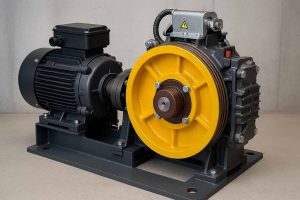
- Physical Layer (Hardware): including sensors, drives, and control panels.
- Communication Layer: protocols such as CAN bus or Modbus that transfer data.
- Control and Monitoring Layer: central software that makes high-level decisions.
Main Hardware Components in EMS
1. Intelligent Control Panel
The brain of any elevator is its control panel. In advanced EMS, these panels are equipped with powerful processors that analyze floor traffic and select the optimal route.
2. Condition Monitoring Sensors
These sensors include:
- Load cells to prevent overloading.
- Vibration sensors to detect rail anomalies.
- Temperature sensors to monitor the motor.
3. User Interfaces and Call Panels
In modern systems, touch panels and facial recognition systems replace traditional buttons to enhance security and user convenience.
Benefits of Implementing a Central Management System
Using EMS is not just a luxury; it offers numerous economic and operational benefits:
- Reduced energy consumption: through optimized management of movements and use of 3VF drive systems.
- Reduced waiting time: traffic distribution algorithms ensure passengers spend minimal time in the lobby.
- Extended component lifespan: by evenly distributing workload among multiple elevators.
FAQ: Basics and Hardware of Elevator Management Systems
Traffic and Dispatching Algorithms
The heartbeat of elevator management software is its dispatch algorithm. In high-rise buildings, if all elevators respond to every call, chaos occurs.
Destination Control System (DCS)
This is one of the most advanced methods in elevator management. The passenger selects the destination floor on the central panel before entering the elevator. The system then directs them to the elevator that best aligns with other passengers’ destinations, reducing unnecessary stops.
Peak Hour Traffic Management
Smart management systems can shift phases based on the time of day. For example, at the start of the workday in a commercial tower, the system prioritizes moving from the lobby to upper floors (Up-peak).
Central Monitoring Software and Management Dashboard
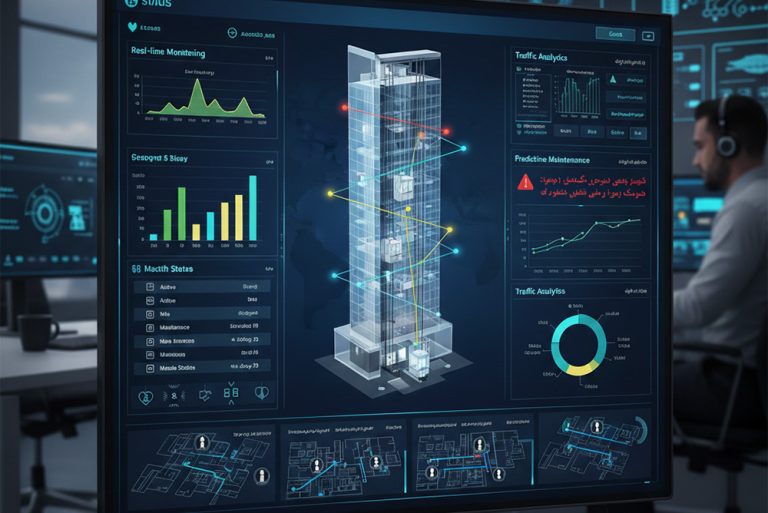
Building managers or maintenance teams access all data via a graphical interface (GUI). Features include:
- Live position display: See exactly which floor each cabin is on and its status (moving, stopped, error).
- Statistical reporting: Analyze number of starts per day, busiest floors, and energy consumption.
- Remote control: Ability to disable an elevator or change settings without being in the machine room.
Security and Access Control in EMS
A comprehensive EMS must integrate with the building’s physical security system, including:
- Floor restrictions: Using RFID cards or fingerprint access for specific floors (like penthouses or management units).
- Intercom and audio system: Two-way communication with the security room in case of malfunction.
- Integration with fire alarm systems: If the fire alarm is activated, the EMS directs elevators to a safe evacuation floor and keeps doors open.
FAQ: Algorithms and Monitoring Software
Role of IoT in Transforming Elevator Management Systems
Today, “Connected Elevator” has become a standard. Using IoT technology, elevator data is sent to the cloud, where advanced analytics are performed.
Predictive Maintenance
The biggest transformation in management systems is moving from “corrective” to “predictive” maintenance. AI analyzes sensor data to predict if a component (e.g., cable or door) will fail within the next two weeks, preventing sudden breakdowns and trapped passengers.
Communication Protocols and Standards
To enable communication with equipment from different brands, standard protocols are used:
| Protocol | Main Application |
|---|---|
| BACnet | Integration with Building Management System (BMS) |
| CAN open | Fast communication between internal elevator components |
| Modbus TCP/IP | Remote monitoring over web network |
Implementation Challenges and Solutions
Despite the benefits, challenges like high initial cost and need for trained technicians exist. A solution is using modular systems that allow older buildings to gradually adopt smart management (Retrofitting).
Future of Elevator Management Systems
In the near future, we will see technologies such as:
- Cable-free elevators: Using magnetic force for vertical and horizontal movement.
- Augmented Reality (AR): Helping technicians repair complex components faster.
- Optimization with Generative AI: For more accurate prediction of residents’ behavior in towers.
Conclusion
EMS is no longer a peripheral system; it is the backbone of efficiency and safety in modern buildings. Investing in an efficient EMS not only reduces operating costs but also maximizes user satisfaction and safety.