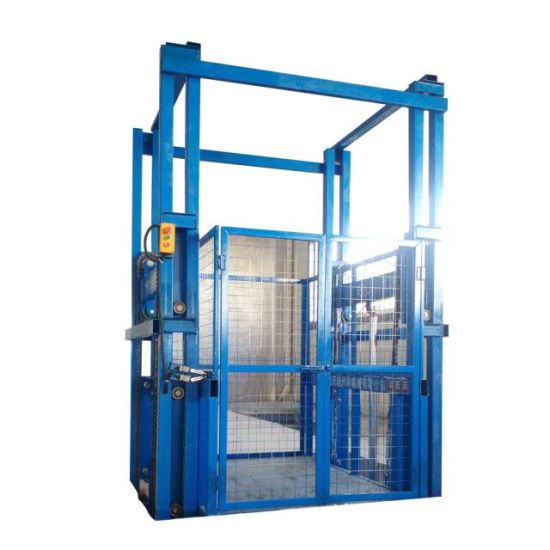
One of the devices used to move items from one floor to another is the lift. Lifts come in various types, including industrial lifts, store lifts, wheelchair lifts, and others. These lifts are responsible not only for transporting objects but also for carrying people and are used in large complexes. Different types of lifts are designed in various models and sizes according to customer preference, budget, and needs. Lifts are divided into two categories: mobile or stationary. Before purchasing these lifts, you should have general information about their types and models.
What is an Industrial Lift?
A lift is a device responsible for carrying goods and people to different heights. Due to its distinct features, an industrial lift differs from various cranes, hoists, and other lifting devices. Lifts are a type of machine used for transporting loads along production lines in different industrial and commercial sectors. Another place where a lift is needed is for moving goods and unloading truck cargo.
Types of Lifts
Lifts are classified based on the system used, height, efficiency, and other factors. There is also another type of lift that combines several lifts and offers better performance. Examples of these lifts include industrial lifts, spider lifts, cable lifts, articulated lifts, telescopic lifts, and others. When selecting and purchasing lifts, various factors should be considered, and high-quality models should be used to ensure the safety of individuals.
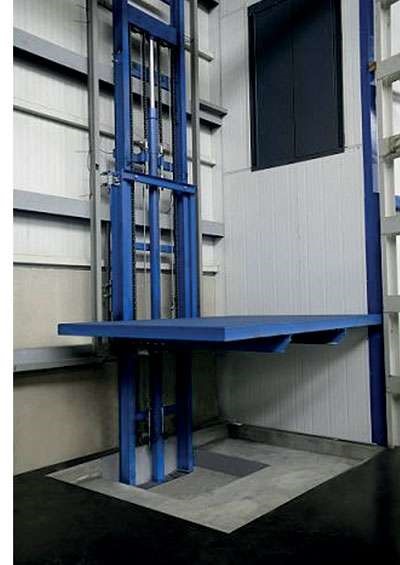
When purchasing industrial lifts, you should try to buy a high-quality model to ensure the safety of the people using it and to minimize the need for frequent repairs. One preventive measure is to purchase from a reputable company and not neglect regular and continuous maintenance of the lift.
Industrial Lift Cabin
One of the components of an industrial lift that moves the load is the cabin. The cabin or platform of the lift is designed and built according to the lift’s function. A fully enclosed cabin with a roof and walls offers the highest safety, but in some cases and conditions, this is not possible, and only a platform or cabin may be used. In such cases, all necessary standards and regulations for constructing and using the lift must be followed. The cabin used in building and factory lifts must have its unique features.
An important aspect to consider in an industrial lift is its high strength and load-bearing capacity. Since industrial lift cabins are responsible for transporting heavy loads, they must be able to carry significant weight. Therefore, during design, sufficient attention must be paid to the cabin’s capacity. This resistance must be ensured against both static and dynamic forces.
Types of Industrial Lifts
Industrial lifts are divided into stationary and mobile types, each with its specific features and suitable applications. Mobile lifts are used for service work, construction, buildings, and other tasks. Stationary lifts are used in production lines, warehouses, and other areas where heavy loads, such as vehicles, need to be moved. Stationary lifts are further categorized based on jack placement, including indirect jack lifts, side direct jack lifts, and under direct jack lifts.
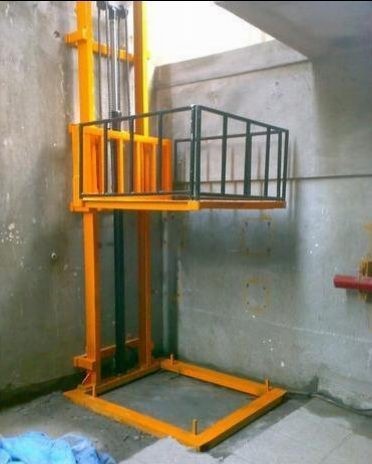
Stationary lifts are used in various locations for transporting loads. Examples include store lifts, industrial warehouse lifts, factory lifts, and parking lifts. Types of stationary lifts include accordion lifts, fixed jack lifts, and others. Before selecting and purchasing a lift, it is recommended to consult with a specialist in the field to make the right choice.
Mobile (Portable) Industrial Lifts
One type of industrial lift is the mobile or portable lift, designed for human use. Mobile lifts are divided into two categories: hydraulic lifts with vertical access and mobile lifts with both vertical and horizontal access. Hydraulic lifts are a popular type of industrial lift and operate vertically, without horizontal movement. Their advantages include efficiency, time-saving, and good safety.
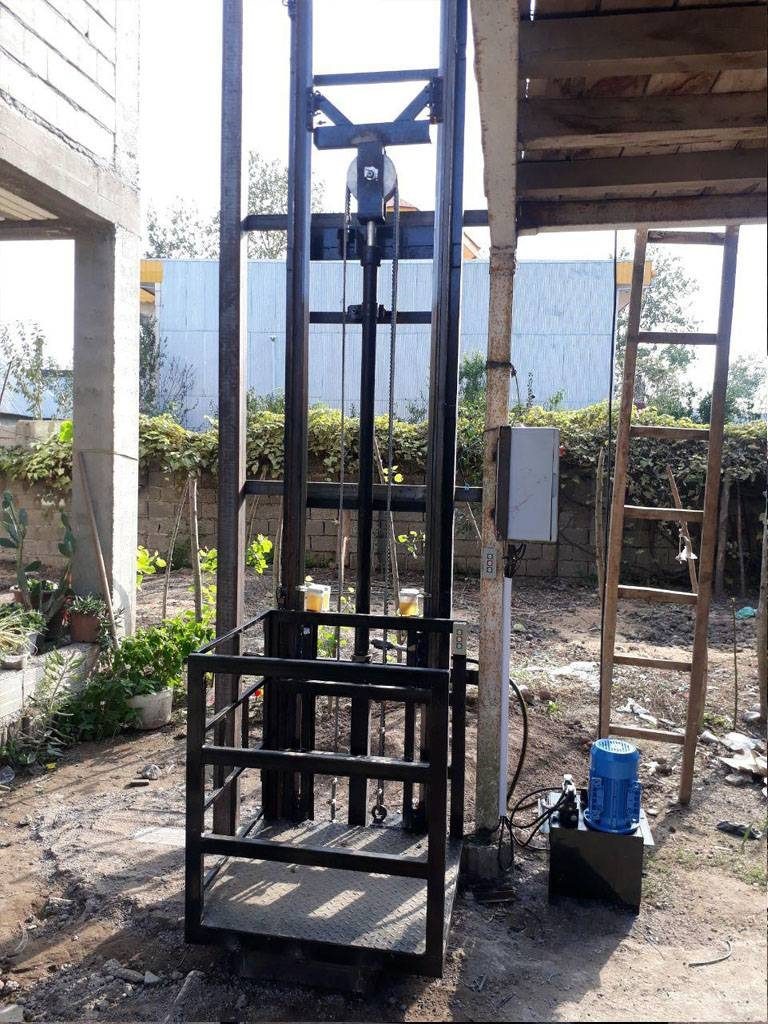
Mobile industrial lifts with vertical and horizontal access are another type of industrial lift, also known as boom lifts. The mechanisms for these lifts include articulated, telescopic, and articulated-telescopic designs. The articulated mechanism is simpler, while the articulated-telescopic mechanism is a newer and more useful model. The choice depends on the customer’s needs.
Industrial Lift Capacity
Industrial lifts are designed and manufactured in various models and capacities based on usage needs and locations. Depending on daily usage, the capacity and strength can be determined. The lift capacity and mechanism are available in two types: stationary and mobile. The mobile type combines several lifts and is called a combined lift.
Conclusion
As mentioned, the industrial lift is a type of lift divided into mobile and stationary categories, with various functionalities for transporting people and loads. Due to its role in carrying people and goods, an industrial lift must be built according to standards and regulations to ensure safety. Those intending to purchase an industrial lift should first consult with a knowledgeable specialist, considering their budget, preferences, and intended location of use. CabinPlus Industrial offers high-quality services in the sale of various industrial lifts.